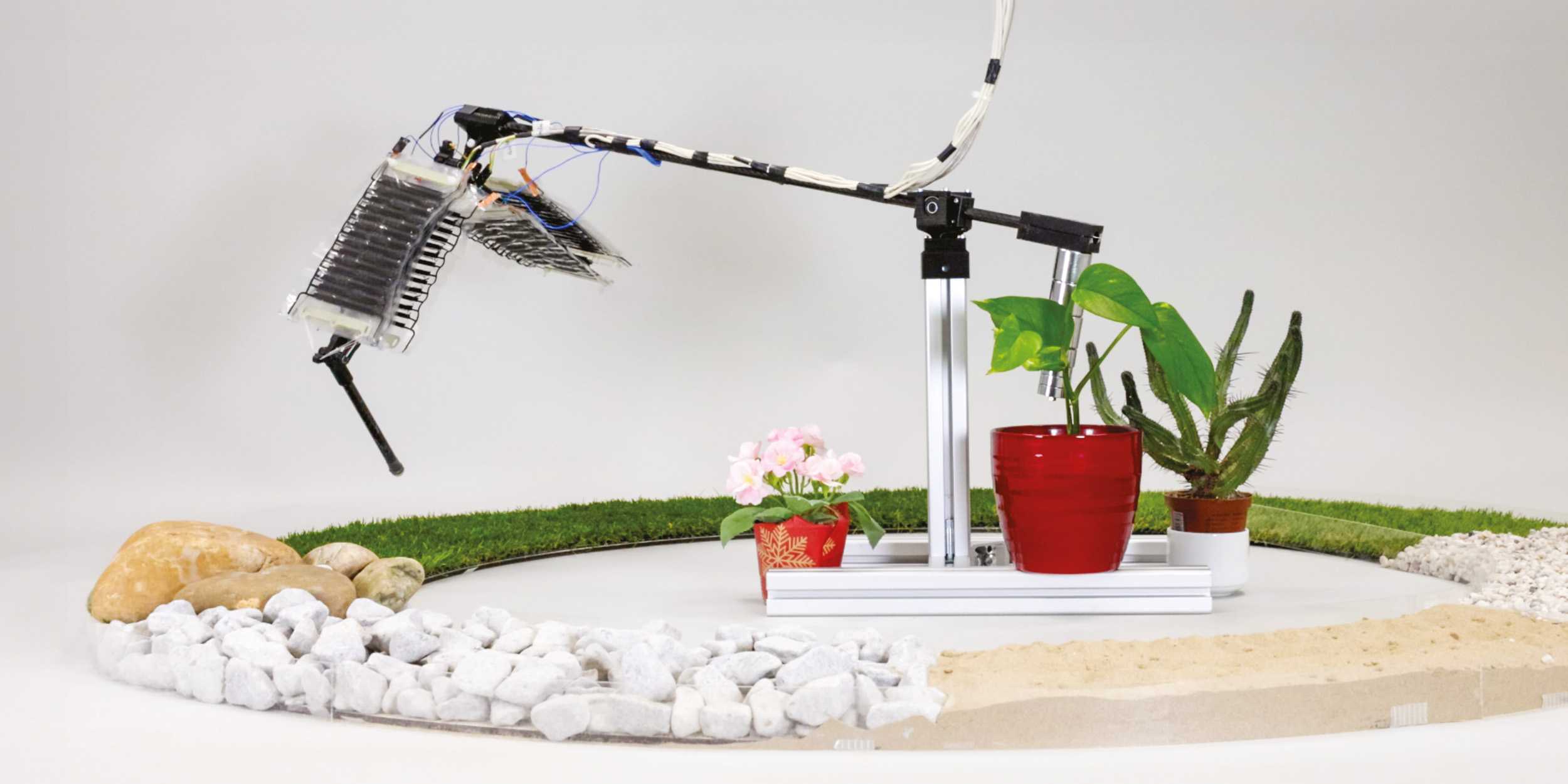
Researchers at ETH Zurich and the Max Planck Institute for Intelligent Systems built a robotic leg powered by electrohydraulic artificial muscles. Paired oil-filled actuators contract when voltage is applied, pulling on tendons to bend or extend the leg. The team demonstrated jumping and adaptation to uneven terrain, and reported the design in Nature Communications.
Unlike a rigid motor-driven joint that depends on continuous sensing and control, the compliant muscle arrangement adjusts mechanically as it contacts different surfaces. In comparisons involving sustained postures, it also avoided the heat losses observed in the motor-driven reference leg. The prototype remained attached to a supporting rod and moved in circles, rather than walking freely as a complete robot. The result demonstrated an alternative actuation system for agile, adaptive machines, with untethered locomotion left for future development.