ETH drone keeps flying after collisions
ETH Zurich’s FlexiQuad uses a flexible ring-shaped frame to survive collisions at around 25 km/h while retaining agile flight.

ETH Zurich’s FlexiQuad uses a flexible ring-shaped frame to survive collisions at around 25 km/h while retaining agile flight.
ETH Zurich is leading the ETHOS satellite mission to measure how solar activity affects Earth’s upper atmosphere and satellite orbits, with operations planned from 2030.

Zurich startup Square8 builds AI workers for finance, HR and operations, with human approval for sensitive actions.
Apple is reportedly taking around 9,500 square metres of office space in Altstetten, with capacity for an estimated 500 to 700 desks.
ANYbotics has begun delivering its explosion-protected inspection robot to customers including Equinor and DSM-Firmenich.
ETH-linked startup Odin Robotics demonstrates robot arms loading a CNC mill and packing containers from a moving conveyor, as part of its launch in Y Combinator's Fall 2026 batch.
Enact raises USD 30 million to develop robots that sense force and touch through their own actuators.

ETH Zurich researchers jointly designed living muscle tissue and soft scaffolds to build small robots that jump, walk, swim and grasp, with up to eleven times the movement of comparable earlier actuators.

Zurich startup Turiq combines market news, internal research and portfolio data to help financial institutions prepare investment decisions and client updates.

Zurich consumer-software company TenThirty reports USD 6.5 million in annual recurring revenue, achieved in under eleven months with a six-person team.
An EU disclosure reveals Apple's deal for selected assets and employees of Samplab, the ETH-founded developer of AI audio-editing software.
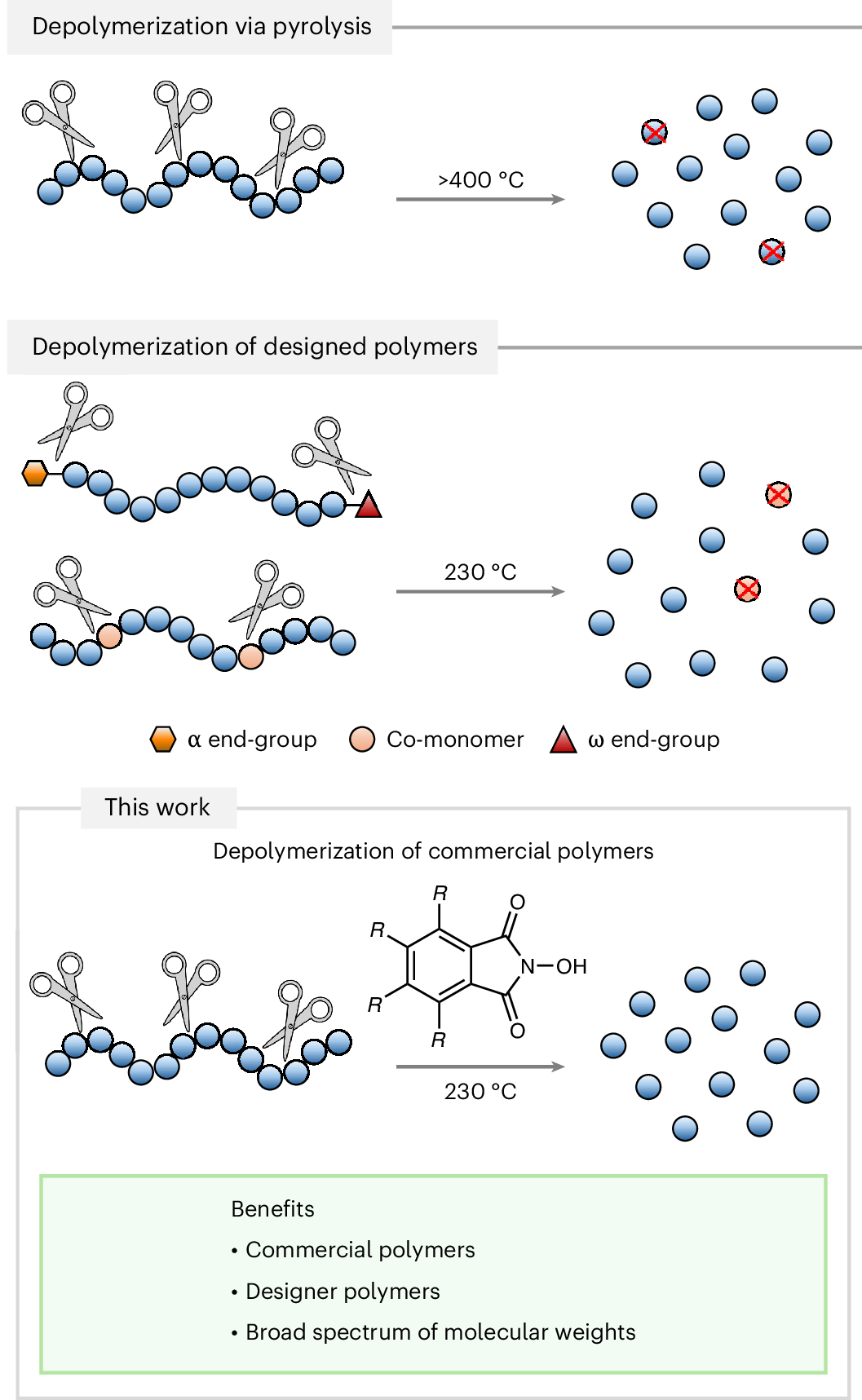
ETH Zurich researchers break down acrylic plastic into reusable chemical building blocks without solvents, achieving yields of up to 98%.
ETH Zurich researchers taught an ANYmal robot to scan, plan and solve a giant Rubik’s cube autonomously, using its feet to hold and turn the layers.
Stellar Alpina reports completing 150 rocket-engine hotfires across 23 configurations, exceeding its target of 100 tests over the summer. The Duebendorf propulsion company is developing rotating detonation rocket engines; the campaign follows the eight initial hotfires covered in its earlier funding announcement.
The team deliberately pushed combustion chambers to failure to investigate design limits and collected measurements to guide subsequent iterations. It reports turnaround times as short as 30 minutes between some tests and shared footage of the campaign. These are ground-development tests, not flight qualification or an orbital demonstration.
ETH Zurich researchers developed a printable mixture of sand, bacteria and natural gels to make architectural elements, including a facade component. After printing, daily mineralisation baths let the bacteria form calcium carbonate crystals that bind the sand together. The material hardens at room temperature over two to five days, without firing it in a kiln.
A second method uses a robotic arm to deposit sand, bacteria and mineralising substances in successive layers, demonstrated at the 2025 Venice Architecture Biennale. Neither approach is a ready replacement for structural concrete: load-bearing applications remain distant, and the sprayed material needs further mechanical testing. The reaction also produces environmentally harmful ammonium, so waste treatment must be addressed before claiming a sustainable alternative.
Disney Research and ETH Zurich demonstrated a locomotion system that takes a movement-style example and a joystick velocity command as separate inputs. A style encoder conditions an autoregressive diffusion model, which generates reference motions for a reinforcement-learning controller to follow.
The team demonstrated real-time control and continuous style changes in a simulated humanoid and on a physical robot. The method learns from unstructured motion recordings without explicit style labels and can reproduce styles not seen during training.
Zurich-based Klarent raised USD 8 million in seed funding to expand into the US, grow its engineering team and develop its web and mobile testing platform. Founded by former Google engineers Asheem Panakkat and Momchil Ivanov, the company names JD Sports, NZZ and Sixt among its customers.
Its agents use language models to write and adapt deterministic test code, rather than relying on an AI model to execute each test. Klarent combines this automation with human review of results, aiming to reduce the work of maintaining tests as applications change.
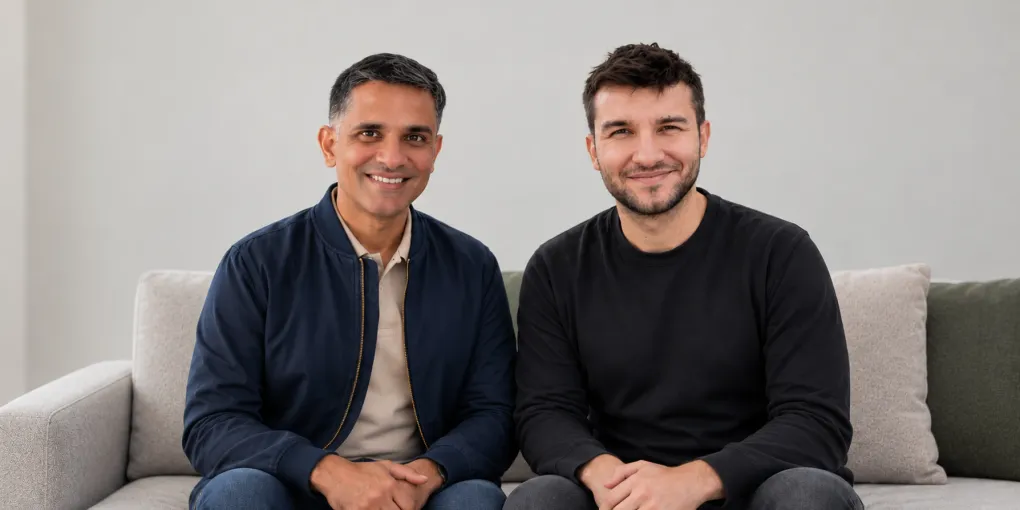
MicroAGI founder Bercan Kilic reports USD 100 million in annual recurring revenue six months after launching Shift. The robotics company has a research hub in Zurich.
UZH researchers treated human blood stem cells with a protein for one hour, improving their ability to regenerate blood after transplantation into mice.

ETH Zurich researchers transmitted a net 138.6 gigabits per second wirelessly from Uetliberg to the ETH campus, a distance of 5.5 kilometres. Operating at 273 GHz, the link crossed urban terrain, waterways and forest. A resonant plasmonic modulator converted the weak incoming radio signal into light, while improvements to the optical receiver doubled its sensitivity.
The result demonstrates fibre-like capacity over a city-scale wireless connection, potentially useful where installing cable is difficult or for temporary backup links. Measurements covered about six and a half hours on one July afternoon and evening. Reliability across seasons and in rain remains to be tested.
