ANYbotics starts shipping ANYmal X for explosive environments
ANYbotics has begun delivering its explosion-protected inspection robot to customers including Equinor and DSM-Firmenich.
ANYbotics has begun delivering its explosion-protected inspection robot to customers including Equinor and DSM-Firmenich.
Stellar Alpina reports completing 150 rocket-engine hotfires across 23 configurations, exceeding its target of 100 tests over the summer. The Duebendorf propulsion company is developing rotating detonation rocket engines; the campaign follows the eight initial hotfires covered in its earlier funding announcement.
The team deliberately pushed combustion chambers to failure to investigate design limits and collected measurements to guide subsequent iterations. It reports turnaround times as short as 30 minutes between some tests and shared footage of the campaign. These are ground-development tests, not flight qualification or an orbital demonstration.
ETH Zurich researchers published benchmarks for EZ130 8T, an open library of 220 reusable circuit cells for IHP's 130nm chip-manufacturing process. In a post-layout matrix-multiplier comparison, the design used 35% less cell area and an estimated 39% less energy than the reference library, with a roughly 3% longer clock period.
Developed by students in a 2025 VLSI course, the library is available under Apache 2.0 and lets designers build chips from transistor-level components through automated design tools. Two chips using earlier versions passed initial tests, but full characterization is still underway. The reported efficiency gains come from design analysis, not measured silicon performance; the September preprint documents the results rather than marking the library's creation.

ETH Zurich and IBM agreed to install and operate an IBM Quantum System Two with a Nighthawk processor at the Swiss National Supercomputing Centre in Lugano. The three-year agreement covers research infrastructure for Swiss universities and selected Swiss companies, funded through an offset agreement between Lockheed Martin and armasuisse.
At the September announcement, operation was expected by the end of 2026. IBM will install, maintain and operate the computer, while ETH Zurich and CSCS provide supporting infrastructure and manage access. ETH users will also have cloud access to IBM quantum resources during installation and throughout the agreement.

ZuriQ raised USD 25.5 million in seed funding led by Quantonation, with Forward.one, Extantia, Firgun Ventures and investors from its previous round participating. The ETH Zurich spin-off will expand its team, research programme and chip fabrication as it scales trapped-ion quantum processors.
The company and ETH researchers have built a demonstrator containing nine individually controlled ions in a 3-by-3 array, using chips fabricated with Infineon. Its Penning micro-traps use a static magnetic field and support a natively two-dimensional layout. The funding targets larger arrays; hundreds of qubits remain a development goal rather than the demonstrated system's capacity.
Aylight raised EUR 4.5 million in pre-seed funding co-led by Elaia and Swisscom Ventures, with Verve Ventures and Plug and Play participating. The Zurich company will use the financing to produce its first foundry-manufactured prototypes and expand its research team.
Its semiconductor laser produces many precisely spaced wavelengths from one chip, replacing the separate light sources normally needed for parallel optical channels. The frequency-comb design targets data-centre interconnects and precision sensing; the announcement concerns prototype development, not volume production.
ETH Zurich's Yiwen Chu and colleagues have demonstrated a quantum-computing architecture that separates processing from memory. A superconducting transmon qubit controls operations while vibrations in an acoustic resonator store quantum states. The team implemented a universal set of quantum gates and ran examples of the quantum Fourier transform and period-finding algorithms on the hybrid device.
Mechanical modes offer compact storage and preserve states during pauses in a computation. The experiment shows that the memory can participate in complete algorithms, rather than simply hold a state. The number of accessible modes currently limits the demonstration; the group is working to improve coherence and accelerate readout as it develops larger systems.

Stellar Alpina reported completing eight detonative hotfires of Engine 0, its first rotating detonation rocket engine, within 82 days of incorporation. The Duebendorf company built and commissioned the test infrastructure itself and said footage from the campaign showed up to five stable detonation waves.
Alongside the ground tests, the company announced CHF 3.5 million in pre-seed funding, approximately USD 4.5 million, led by Founderful with participation from LP&E and strategic investors. The financing supports further engine development for movement between orbits.

AVIAN raised USD 2.6 million in pre-seed funding led by Founderful to expand its industrial monitoring systems beyond wood-processing plants. The Zurich-area company combines infrared cameras, anomaly detection and alerts to identify overheating machinery before failures escalate.
Its cameras continuously monitor equipment such as bearings, conveyors and electrical cabinets, learning the normal temperature patterns at each site. The platform adds maintenance reports and human support, with the funding directed toward engineering and deployment capacity. AVIAN reported installations at approximately 50 sites in nine countries at the announcement.

Mosaic SoC raised USD 3.8 million in pre-seed funding led by Founderful, with participation from Kick Foundation. Founded by ETH Zurich researchers Alfio Di Mauro and Moritz Scherer, the company develops chips that process camera and motion-sensor inputs within the power limits of wearable and mobile devices.
Its multicore design is intended to run spatial perception locally, with software that device manufacturers can integrate into their products. The company reported engineering revenue from development partners and showed an FPGA emulation of its chip. The release describes a route toward commercial chip sales, rather than confirming mass-produced silicon.

Hyperscale Power raised EUR 5 million in seed funding co-led by World Fund and Vsquared Ventures. The Zurich-area company will establish laboratory space, recruit technical specialists and accelerate prototypes of its solid-state transformer design.
The system uses high-frequency power electronics to convert electricity for data centres, vehicle charging and renewable-energy installations. Hyperscale reports a substantially smaller design than conventional equipment and conversion efficiency of up to 98.5%. Research and development will remain in Switzerland, with manufacturing expected to expand elsewhere in Europe.

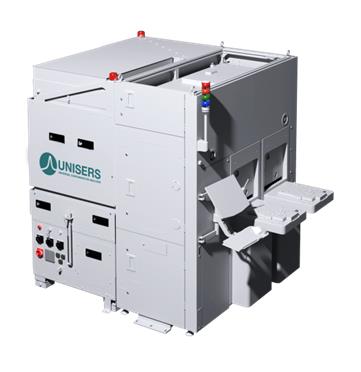
Zurich-based UNISERS announced the sale and shipment of its first fully automated, production-ready contamination-analysis tool to an unnamed semiconductor manufacturer. The company said the system was already operating inside the customer’s fabrication plant, extending its technology from laboratory and pilot use into continuous production.
Its approach identifies particle sources and composition on wafers and in process liquids to help manufacturers investigate contamination-related defects. The customer and sale price were not disclosed.
LIOM develops wearable sensors for non-invasive glucose monitoring.
BTRY develops thin solid-state batteries for sensors and wearable devices.

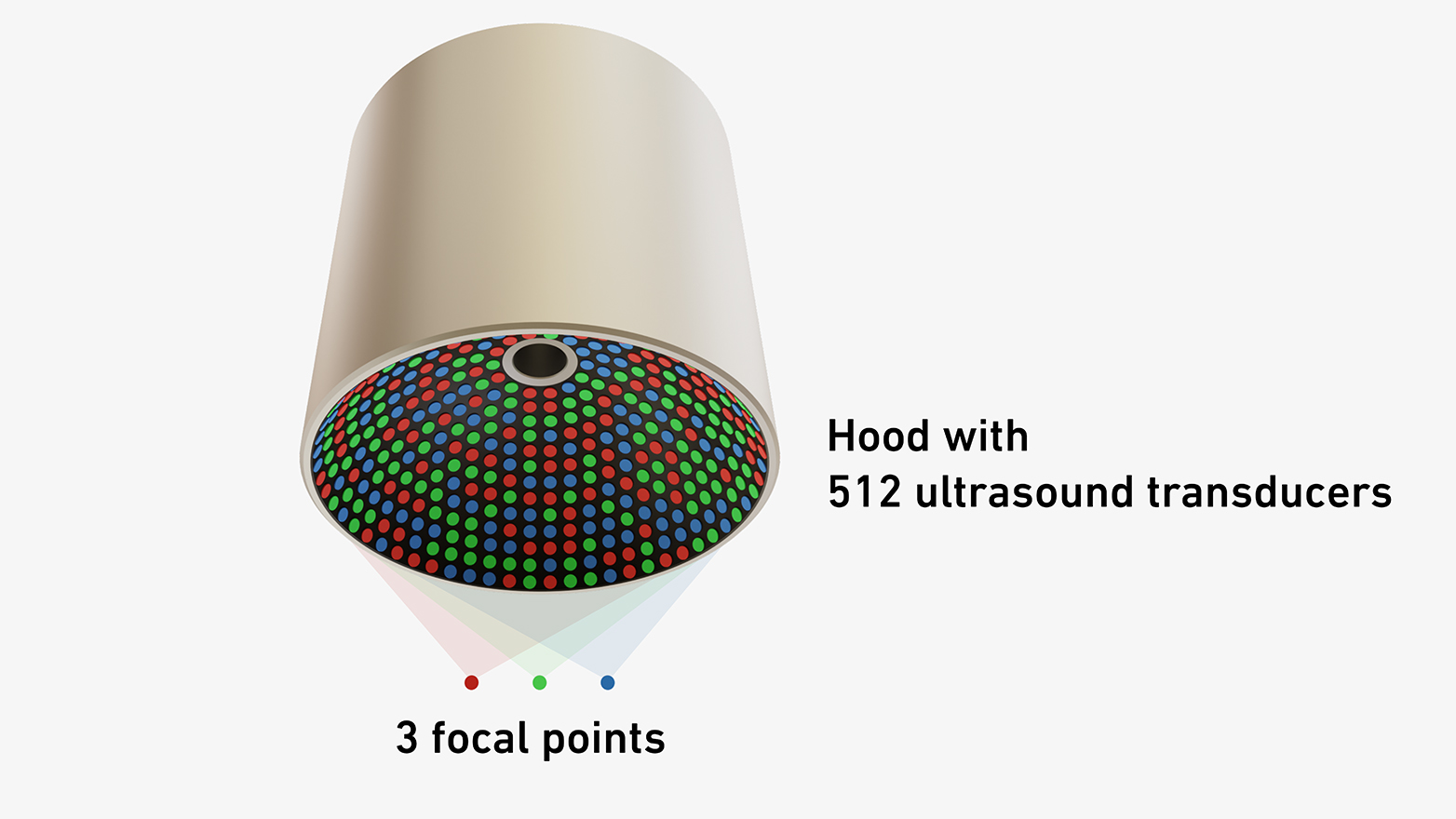
Researchers at the University of Zurich, ETH Zurich and New York University demonstrated an ultrasound system that stimulates several defined brain locations simultaneously. The device uses a hood containing hundreds of transducers whose pulses interfere to create targeted focal points through the skull. In mouse experiments, the team demonstrated stimulation at three and up to five locations.
The system combines stimulation with imaging so researchers can observe which networks respond. Targeting several points together enabled modulation at lower ultrasound intensities than single-spot stimulation in the reported experiments. The device was developed and tested in Zurich, with the New York team contributing neuroscience expertise. Published in Nature Biomedical Engineering, the preclinical work establishes a platform for studying neural networks; testing applications in animal models of brain disease was identified as the next step.
a-metal develops compact metal 3D printers.
Medyria develops catheters for measuring coronary blood flow.
Boost develops vending machines and software for unattended retail.

Odne develops devices and materials for root canal treatment.
Positrigo develops compact PET scanners for brain imaging.