Candi secures USD 50M for solar and battery projects
Zurich-based Candi Solar secured USD 50 million in project financing from Pentagreen Capital for around 400 MWp of solar and battery storage projects in India.

Zurich-based Candi Solar secured USD 50 million in project financing from Pentagreen Capital for around 400 MWp of solar and battery storage projects in India.
Zurich-based UniSieve raised USD 9 million in Series A funding, bringing its total funding to USD 25 million. The company will use the capital to scale deployment of its gas-separation membranes and adapt them to additional industrial applications.
The membranes separate molecules through precisely sized pores, offering an alternative to energy-intensive thermal separation. UniSieve says its systems have reached pre-commercial maturity in olefin separation and carbon capture at emission sources, with field-tested performance and repeatable manufacturing supporting the move towards broader commercial deployment.

Winduction demonstrated an electric bus charging from a ground plate through coils in its tyres. Moving the receiving coils into the wheel reduces the transmission gap compared with underbody charging. The system needs specially developed steel-free tyres because conventional steel belts would absorb energy from the magnetic field as heat.
The company is building a laboratory and test bus stop in Winterthur before integrating the components for operation outside its private test area. Passenger trials are planned for 2028, with Swiss transport operators still in discussions. Smaller batteries and lower route costs are intended benefits, not results from a completed passenger-service trial.
Cotierra raised EUR 2.6 million in a round co-led by PINC and Carbon Removal Partners to scale its decentralised biochar systems. The Zurich company is moving from pilots to repeatable, multi-year commercial deployments, initially in coffee supply chains. Participants also included Zürcher Kantonalbank and other climate-focused investors.
Cotierra combines reactors that convert agricultural residues into biochar near their source with software to operate, monitor and verify production. The carbon-rich material can be returned to farmland, while the platform supports traceability and reporting across distributed sites. The company plans to expand across agricultural regions and crops including cocoa, cotton and citrus.

Metafuels and the Paul Scherrer Institute inaugurated their aerobrew demonstration plant at PSI in Villigen on 20 August. The facility scales up their catalytic process for converting renewable methanol into aviation fuel, following laboratory development.
Designed to produce 50 litres per day, the plant will test and optimise the process under real-world conditions. Metafuels plans its first commercial aerobrew plant for operation from 2030; the PSI installation is the demonstration step toward that scale.

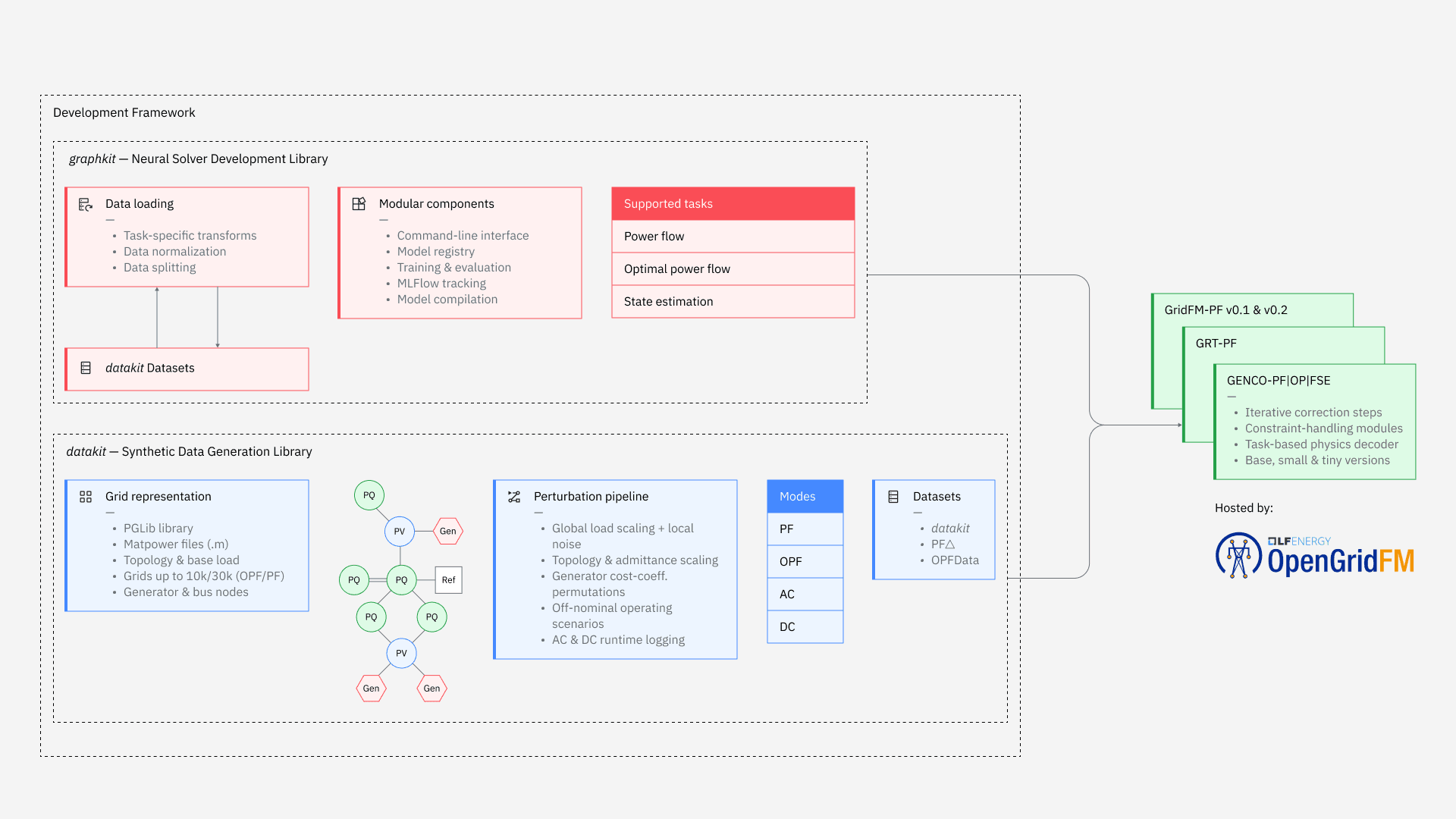
IBM Research and collaborators including ETH Zurich have released GENCO, an open neural solver that handles power flow, generator optimisation and state estimation in one model. The team evaluated it using a full year of operational measurements from Hydro-Quebec's 1,200-node transmission network, alongside benchmark grids with up to 10,000 nodes.
The reported benchmarks show up to 30-fold faster power-flow calculations and up to 85-fold faster optimisation than the classical solvers used for comparison. The release includes training tools, models and datasets through OpenGridFM. GENCO is intended to screen large numbers of scenarios alongside established numerical solvers, which still provide authoritative answers for critical cases.
Hyperscale Power raised EUR 5 million in seed funding co-led by World Fund and Vsquared Ventures. The Zurich-area company will establish laboratory space, recruit technical specialists and accelerate prototypes of its solid-state transformer design.
The system uses high-frequency power electronics to convert electricity for data centres, vehicle charging and renewable-energy installations. Hyperscale reports a substantially smaller design than conventional equipment and conversion efficiency of up to 98.5%. Research and development will remain in Switzerland, with manufacturing expected to expand elsewhere in Europe.

Metafuels raised USD 24 million in a round led by UVC Partners, with its existing investors also participating. The Zurich-area company will use the financing for engineering and project development as it prepares commercial plants based on aerobrew, its process for converting renewable methanol into aviation fuel.
At the February announcement, Metafuels was preparing its demonstration plant at the Paul Scherrer Institute for operation and advancing its planned Turbe facility in Rotterdam. The funding supports design work and investment decisions for those projects; it does not mean commercial-scale fuel production had begun.

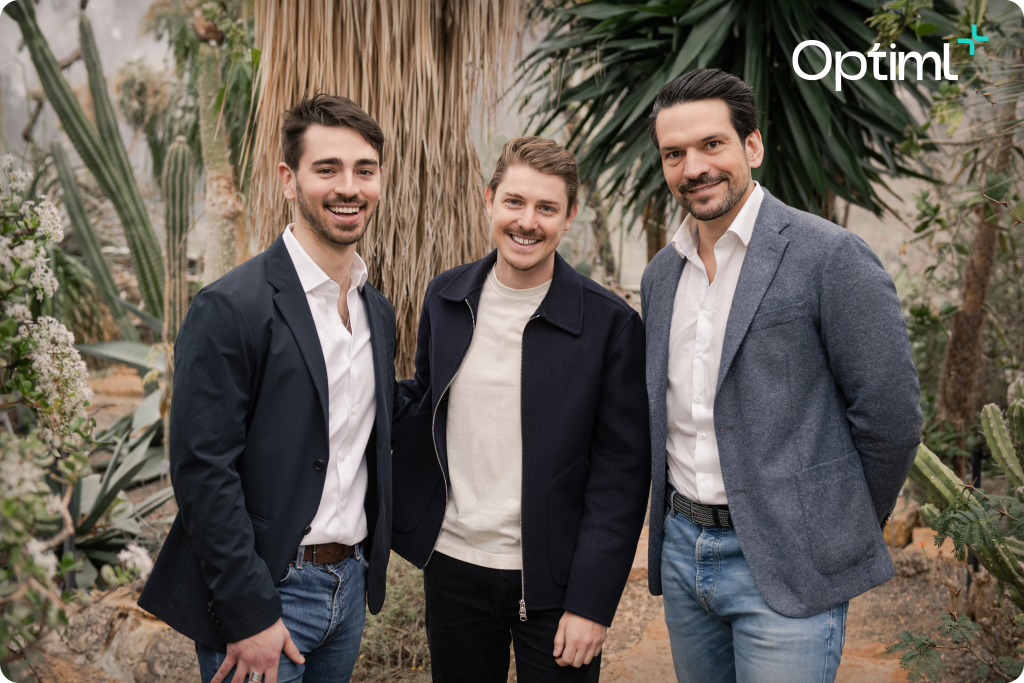
Optiml announced an EUR 8 million seed round to expand its software for planning investment across real-estate portfolios. Built on ETH Zurich research, the system compares whether to retain, sell, refurbish or repurpose buildings while accounting for budgets, financing deadlines, leases and emissions targets.
Its optimisation and energy-simulation tools turn those constraints into sequenced capital-spending plans rather than static building assessments. The company also uses AI to structure source documents such as energy certificates and audit reports, while retaining assumptions and an audit trail so investment teams can examine how a recommendation was produced.
Enshift develops energy management software and installs solar, heating and storage systems.
viboo develops software to optimize heating in buildings.
Unbound Potential develops membrane-free flow batteries for energy storage.
Candi Solar builds and operates solar power systems for businesses.
Grensol develops technology to recover materials from mixed industrial waste.

Climeworks raised USD 162 million in additional equity funding, with BigPoint Holding and Partners Group as the main investors and further support largely from existing backers. The financing took the company's funding since inception above USD 1 billion; that cumulative figure is not the size of the new round.
The proceeds will support development of its direct-air-capture technology and efforts to reduce the cost of removing carbon dioxide. Climeworks described its Mammoth plant as a platform for scaling and testing improvements following its earlier Orca facility. The funding also supports Climeworks Solutions, which assembles carbon-removal portfolios combining different approaches so customers can diversify their purchases rather than depend entirely on direct air capture.

RTDT develops sensors and software for monitoring wind turbine performance.
Jua develops AI weather models for energy forecasting.
Oxyle develops systems to destroy PFAS in wastewater.
Metafuels develops technology to produce synthetic aviation fuel.
terralayr develops software for aggregating battery storage capacity.