Menu

News

Quantum

Tags

Qiskit Fermions simplifies quantum simulations of electrons

IBM has released Qiskit Fermions, an open-source toolkit for expressing quantum simulations of electrons and other fermionic particles before translating them into qubit circuits. Developed with IBM Research Zurich, it lets researchers preserve the structure of chemistry and materials problems further into compilation, where that information can help produce shallower circuits.

The package combines operator representations, fermionic gates and configurable mappings with the Qiskit compiler. IBM's worked example keeps the two-qubit depth of a Fermi-Hubbard time-evolution step constant at 12 as the model grows from four to 100 sites, compared with 407 at 100 sites for the conventional mapping used in its comparison. Researchers can install the toolkit and adapt its encodings to their own simulations.

Qiskit Fermions preserves fermionic representations before compiling them into qubit circuits. Diagram: IBM.

Quantum computer runs algorithms using vibrations as memory

ETH Zurich's Yiwen Chu and colleagues have demonstrated a quantum-computing architecture that separates processing from memory. A superconducting transmon qubit controls operations while vibrations in an acoustic resonator store quantum states. The team implemented a universal set of quantum gates and ran examples of the quantum Fourier transform and period-finding algorithms on the hybrid device.

Mechanical modes offer compact storage and preserve states during pauses in a computation. The experiment shows that the memory can participate in complete algorithms, rather than simply hold a state. The number of accessible modes currently limits the demonstration; the group is working to improve coherence and accelerate readout as it develops larger systems.

False-colour close-up of the hybrid device: the transmon sits on the lower chip and the acoustic resonator on the upper chip. Image: Chu Group / ETH Zurich, adapted from the study's Figure 1.

Quantum experiment turns imperfect randomness into certified random bits

ETH Zurich physicists have demonstrated a way to turn imperfect random inputs into random bits certified by a quantum experiment. The team connected two superconducting quantum chips through a 30-metre refrigerated link and combined a loophole-free Bell test with a randomness-extraction algorithm. The result addresses a weakness in cryptography: apparently random inputs can contain correlations that make secret keys predictable.

The experiment demonstrates randomness amplification, a task that cannot be achieved using classical processing alone under the same assumptions. Its certification comes from the measured quantum correlations rather than trust in the devices' internal construction. The present apparatus requires cryogenic hardware and a long physical separation between the chips; turning the result into a practical randomness service remains a further engineering step.

Andreas Wallraff and Renato Renner beside the 30-metre link connecting the experiment's quantum chips. Photo: Kilian Kessler / ETH Zurich.

Zurich-developed algorithms become NIST post-quantum standards

NIST published its first three final post-quantum cryptography standards, including two developed by IBM Research scientists in Zurich with external collaborators. ML-KEM, derived from CRYSTALS-Kyber, provides a mechanism for establishing shared secrets. ML-DSA, derived from CRYSTALS-Dilithium, provides digital signatures. Their standardisation turned years of cryptographic research and public evaluation into specifications ready for deployment.

The standards address the risk that future quantum computers could break widely used public-key cryptography. They run on conventional computers and give software developers concrete specifications for migrating communication and authentication systems. NIST's third standard, SLH-DSA, is based on hash-based signatures and was co-developed by a researcher who subsequently joined IBM. The publication provides a common foundation for replacing vulnerable cryptographic components across enterprise and public infrastructure.

Illustration accompanying IBM's post-quantum standards announcement. Image: IBM Research.

Chip-based trap controls a single ion's quantum state

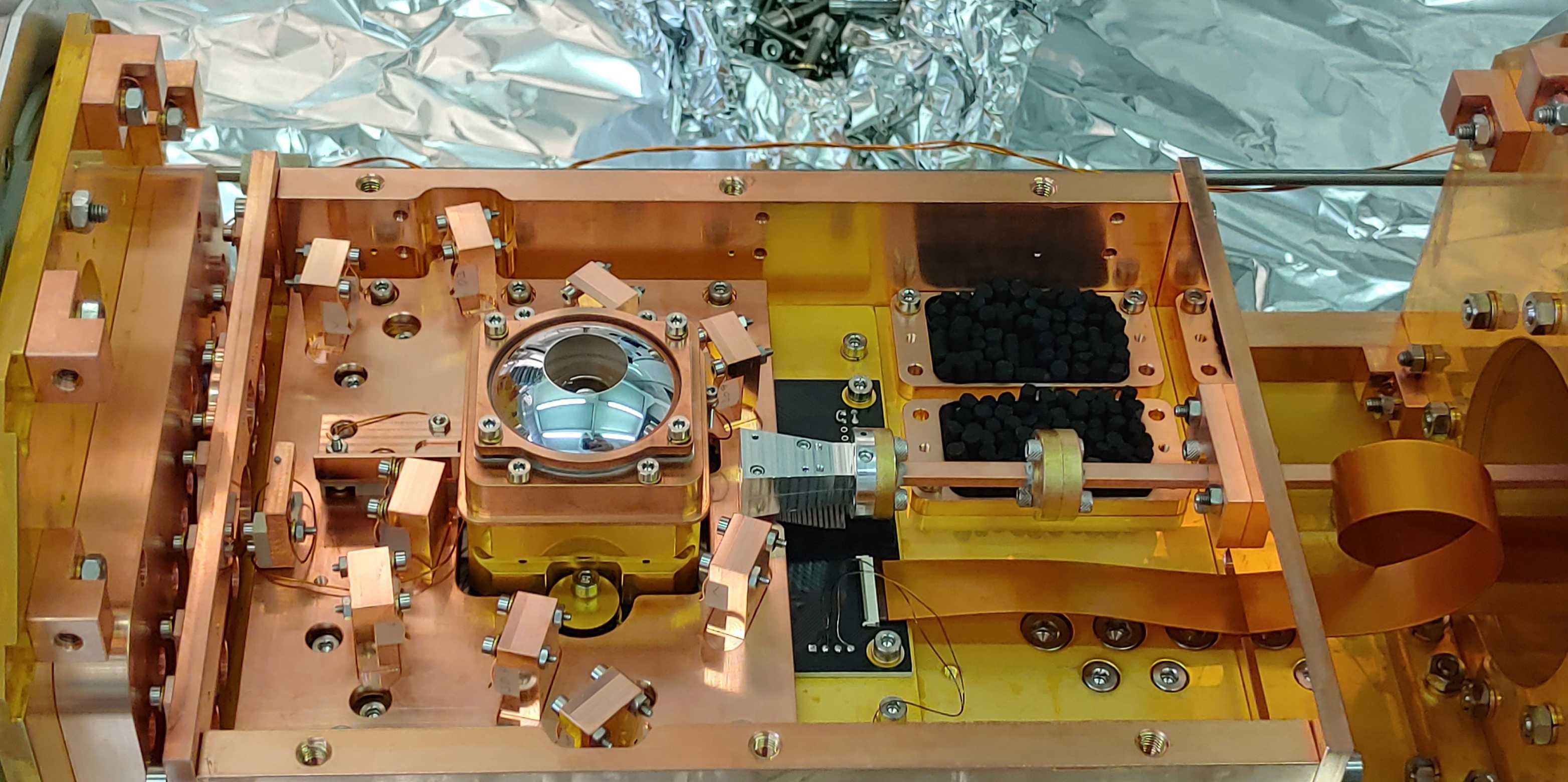
ETH Zurich researchers demonstrated a microfabricated ion trap that uses static electric and magnetic fields instead of the oscillating fields used in conventional trapped-ion quantum computers. Jonathan Home's team combined an electrode chip with a three-tesla superconducting magnet and demonstrated coherent control of a trapped ion's internal and motional quantum states.

The experiment also moved a single ion freely across a two-dimensional plane by adjusting the electrode voltages. This offers a different approach to connecting trapping sites without the fixed transport channels of conventional designs. The demonstrated device was a single-ion research platform: operations between ions in neighbouring traps remained a next step. The results were reported in Nature, with potential applications in quantum computing and scanning probes of surface fields.

Experimental apparatus for the chip-based Penning trap. Photo: Pavel Hrmo / ETH Zurich.

Quantum circuits pass a loophole-free test of entanglement

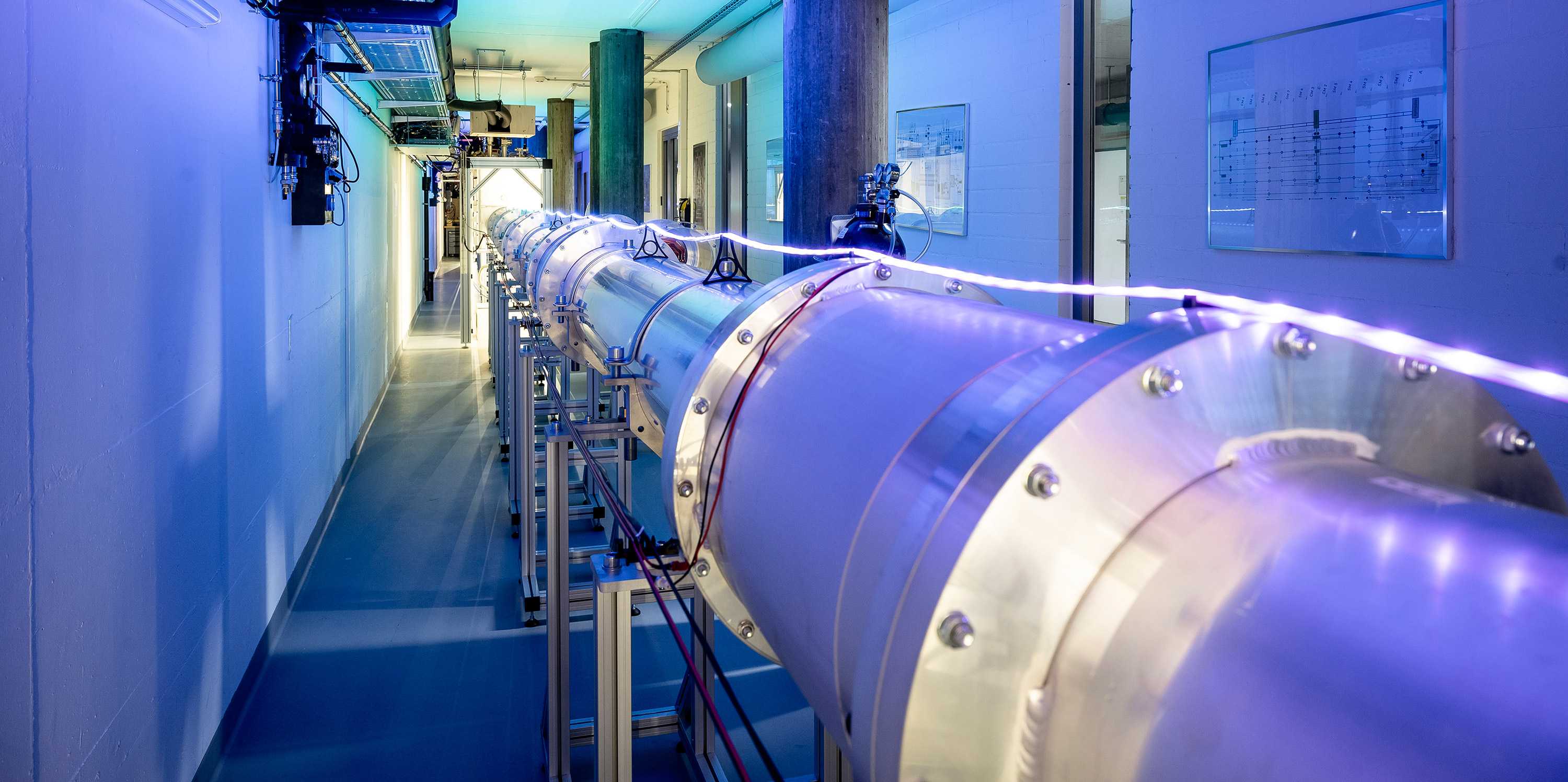
ETH Zurich researchers demonstrated a loophole-free Bell test using superconducting circuits connected through a roughly 30-metre cryogenic link. The experiment tested correlations between entangled quantum systems while arranging the measurements so that a signal travelling at the speed of light could not pass between them in time to explain the result. Andreas Wallraff's group carried out the work on ETH's Zurich campus.

More than a million measurements violated Bell's inequality, extending this form of test to superconducting circuits used in quantum-computing hardware. The apparatus required a long vacuum and cooling system linking the two experimental stations while preserving fragile quantum states. Beyond testing quantum theory, the work demonstrated techniques relevant to connecting superconducting quantum devices over distance. The measured correlations provided a stringent test of quantum behaviour in these engineered electrical circuits.

The long cryogenic connection used for ETH's superconducting-circuit experiment. Photo: ETH Zurich / Daniel Winkler.

Confirm