Menu

News

ML

Tags

Robots copy walking styles from motion examples

Disney Research and ETH Zurich demonstrated a locomotion system that takes a movement-style example and a joystick velocity command as separate inputs. A style encoder conditions an autoregressive diffusion model, which generates reference motions for a reinforcement-learning controller to follow.

The team demonstrated real-time control and continuous style changes in a simulated humanoid and on a physical robot. The method learns from unstructured motion recordings without explicit style labels and can reproduce styles not seen during training.
Walk Like This demonstration in simulation and on a physical robot. Video: Disney Research / ETH Zurich.Watch video

AI predicts how metal melts during laser welding in milliseconds

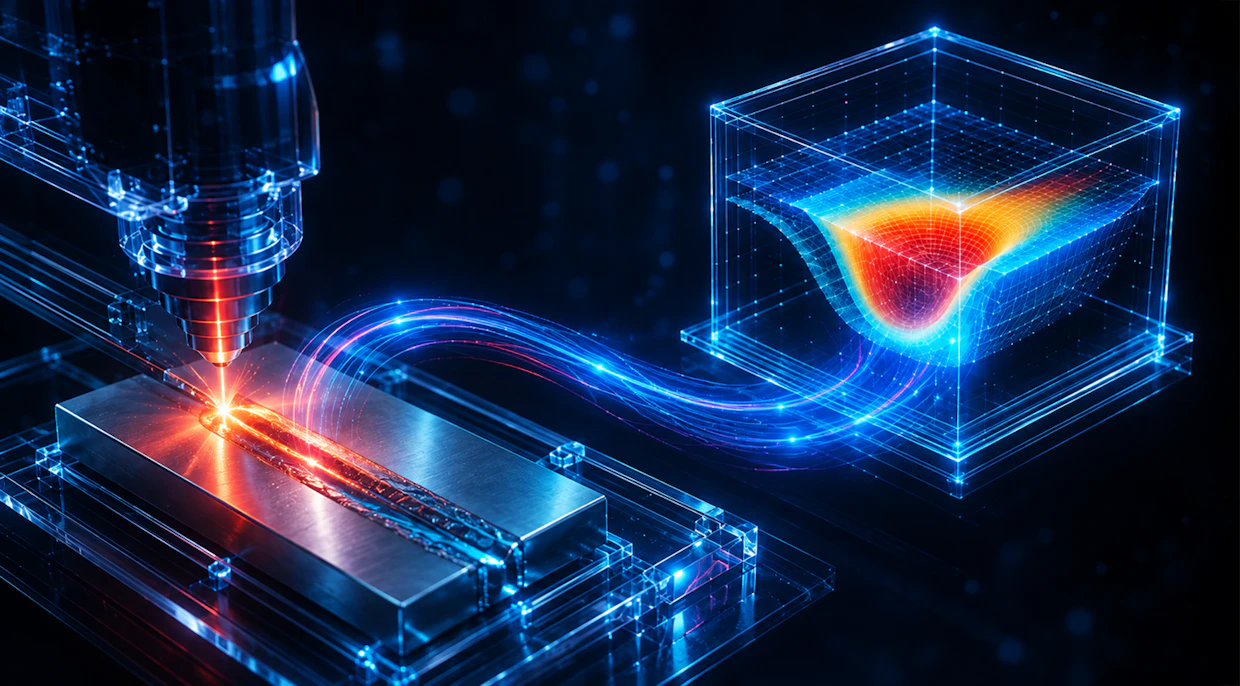
Empa and Terra Quantum developed a machine-learning model that predicts three-dimensional temperature fields and melt-pool boundaries in laser welding. After training, the Laser Processing Fourier Neural Operator produced predictions in about eight milliseconds at standard resolution and 88 milliseconds at twice that resolution, replacing physics simulations that took minutes or more than an hour.

The model learns how laser power and scanning speed affect the heated metal. Its formulation follows the moving laser and averages over time, making it useful for stable welding conditions. Strongly transient effects, including pore formation and collapsing vapour cavities, remain unresolved; real-time factory control is a prospective application rather than a demonstrated deployment.

Laser welding combines heat transfer, molten-metal flow and vapour cavities. Image: Empa.

FLUX-mimic learns to sort car parts

Mimic and BMW researchers tested FLUX-mimic on automotive tasks including component assembly, cable routing and sorting deformable foam parts into trays. The model combines a pretrained FLUX 3 video backbone with an action model that generates robot movements, without needing to generate a complete video during operation.

In the foam-part sorting experiment, a Franka robot succeeded in 95% of 40 trials after eight hours of action-labelled demonstrations. That figure excludes earlier backbone pretraining: the project collected nearly 296 hours of industrial recordings across 31 tasks, alongside the backbone's broader training data. The results demonstrate controlled research tasks with separately trained robot policies, not general-purpose factory autonomy.

Soft-part kitting experiment. Video: mimic robotics

Open-source GENCO model speeds up power-grid calculations

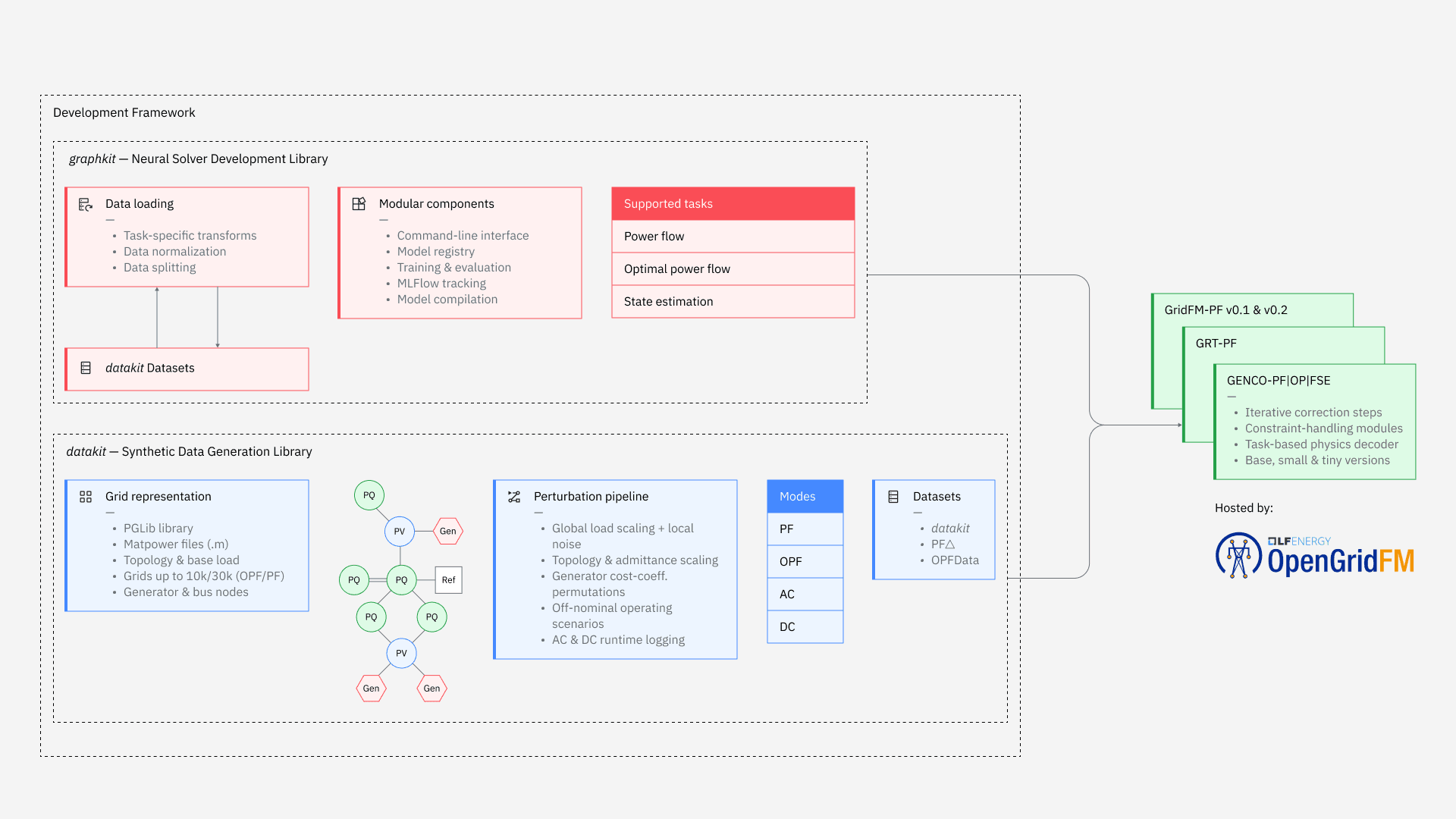
IBM Research and collaborators including ETH Zurich have released GENCO, an open neural solver that handles power flow, generator optimisation and state estimation in one model. The team evaluated it using a full year of operational measurements from Hydro-Quebec's 1,200-node transmission network, alongside benchmark grids with up to 10,000 nodes.

The reported benchmarks show up to 30-fold faster power-flow calculations and up to 85-fold faster optimisation than the classical solvers used for comparison. The release includes training tools, models and datasets through OpenGridFM. GENCO is intended to screen large numbers of scenarios alongside established numerical solvers, which still provide authoritative answers for critical cases.

GENCO and the GridFM development framework. Diagram: IBM Research.

AI evaluates race-car aerodynamics in seconds instead of hours

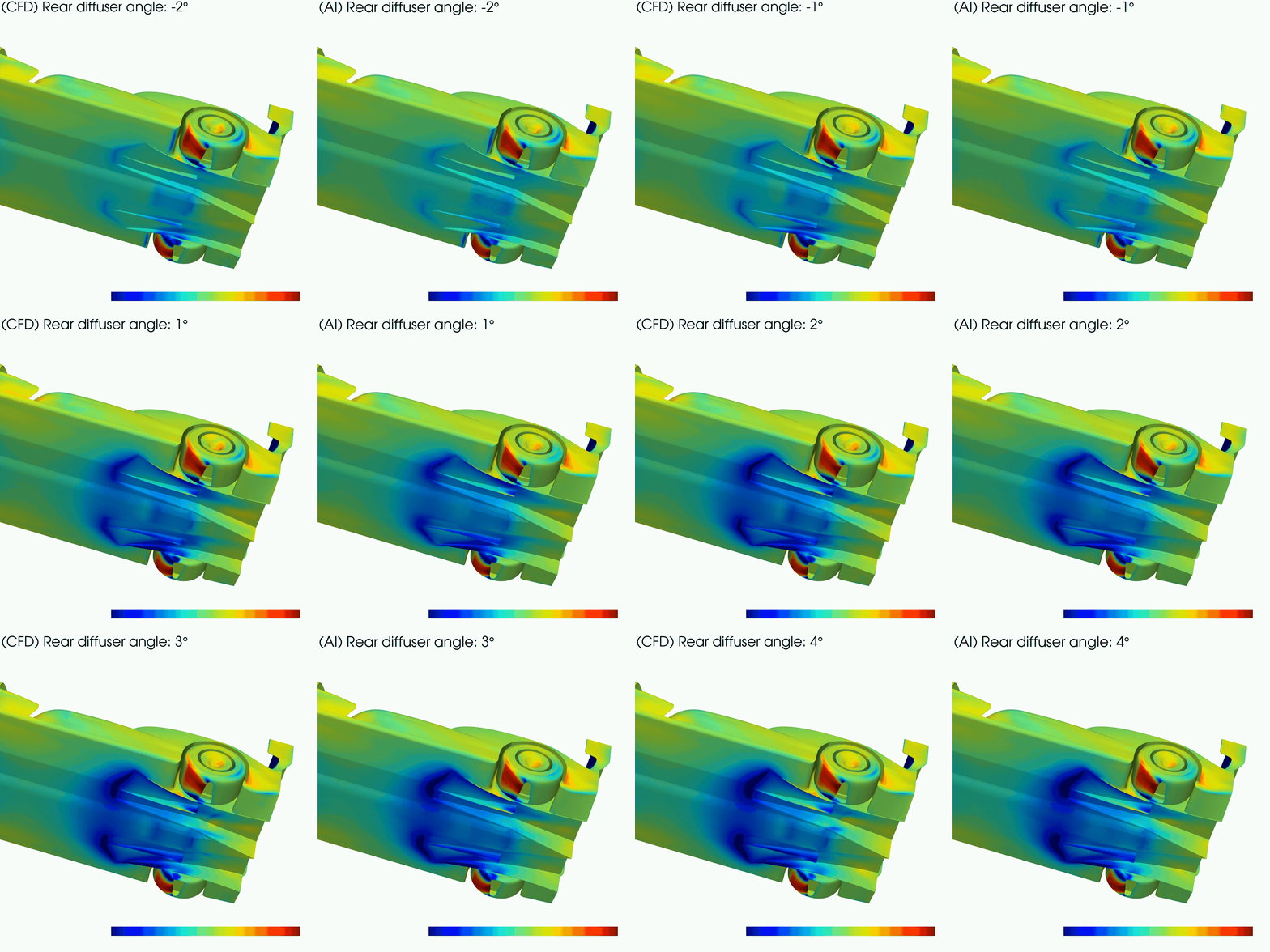
IBM researchers working with Dallara have demonstrated a machine-learning model that evaluates race-car diffuser designs in about ten seconds, compared with several hours for conventional computational fluid dynamics. In a comparison using an LMP2-like car, both approaches selected the same optimal design. The model learned from Dallara's engineering-validated simulations and was tested on held-out examples.

The Gauge-Invariant Spectral Transformer, or GIST, uses both mesh coordinates and their connections to represent detailed aerodynamic surfaces. The work includes Cristiano Malossi's team at IBM Research Zurich. These are preliminary simulation results for design screening; performance on unfamiliar vehicles still needs validation. Quantum computing is a proposed future direction, not part of the demonstrated acceleration.

Simulated pressure fields for different rear-diffuser angles: conventional CFD on the left and IBM's GIST model on the right. Animation: IBM and Dallara.

Rapidata raises USD 8.5M seed

Zurich-based Rapidata raised USD 8.5 million in seed funding co-led by Canaan Partners and IA Ventures, with Acequia Capital and BlueYard participating. The investment will expand its network for collecting human feedback used to train and evaluate AI models.

Rapidata distributes short, opt-in tasks through consumer apps and matches tasks with relevant participants. AI developers can request judgements, preferences and validation data through the platform rather than building and managing their own annotation operations.

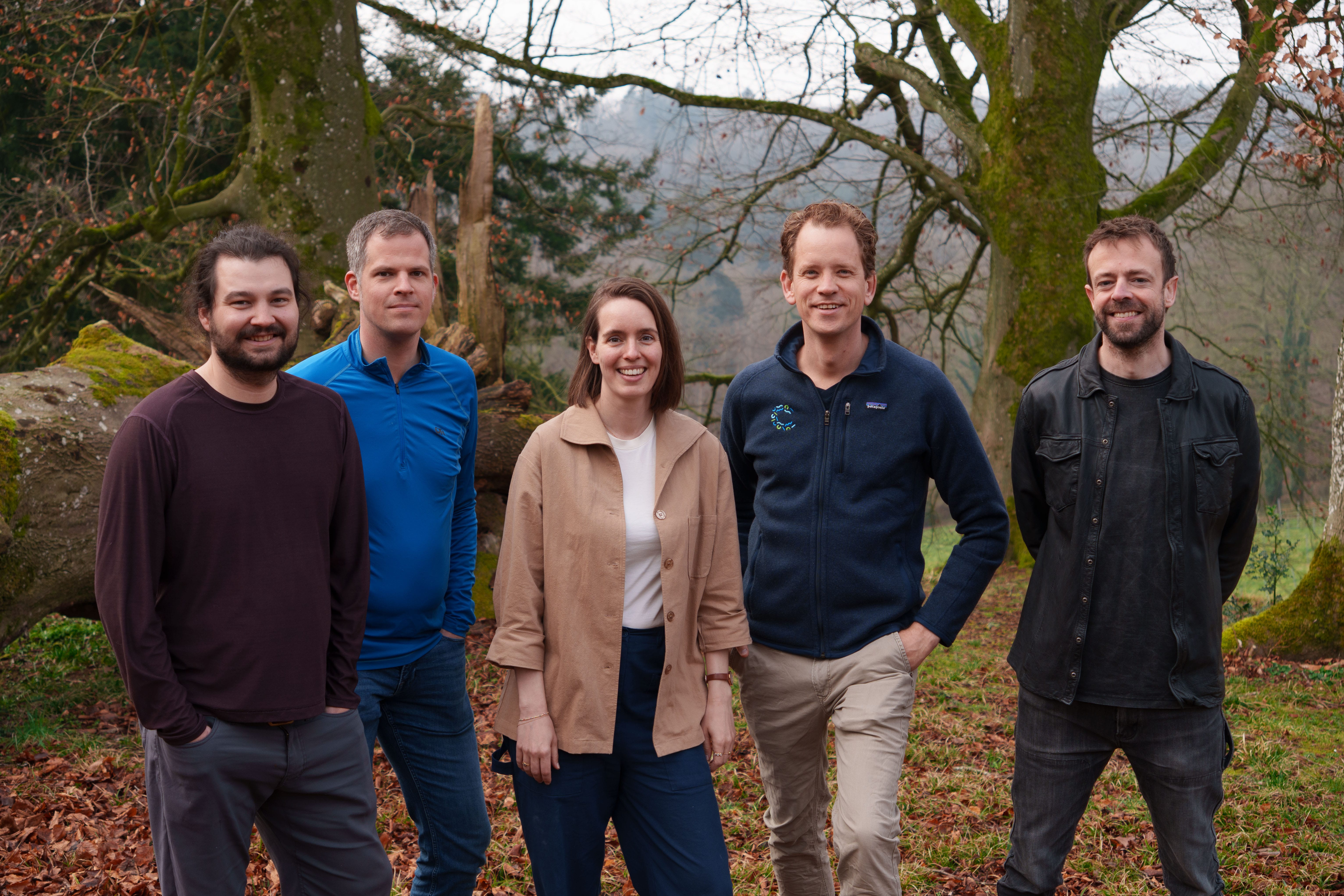
Rapidata founders Luca Strebel, Mads Alber, Jason Corkill and Marian Kannwischer. Photo: Rapidata

Aeon raises EUR 8.2M seed

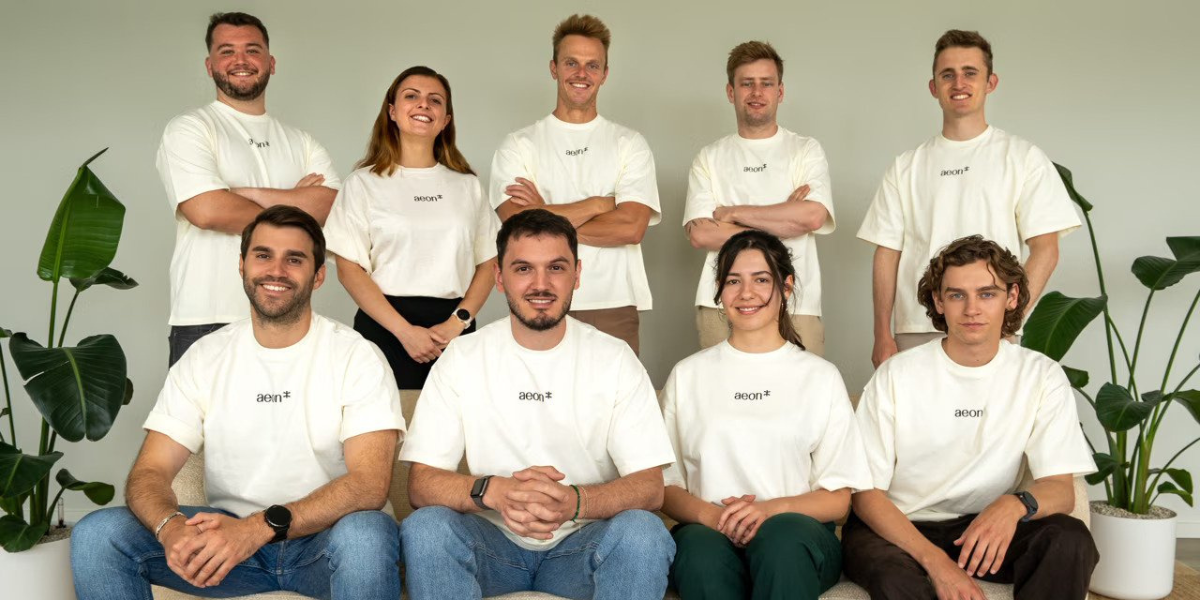
Aeon announced EUR 8.2 million in seed financing to expand its preventive-health service across Europe. Concentric led the round, joined by Calm/Storm Ventures, GoHub Ventures, Kadmos Capital, EWOR and investor Daniel Gutenberg.

The Zurich-area company combined whole-body MRI, blood biomarkers, genetic information and physician review in a single assessment. It planned to use the proceeds for expansion in Switzerland, Germany and the UK, development of its AI platform, and partnerships with insurers and employers.

Aeon financing announcement image published by Concentric. Photo credit: Tech.eu, as credited by Concentric.

Manukai announces USD 3M pre-seed financing

Zurich-based Manukai announced USD 3 million in pre-seed financing to develop AI software for CNC programming. The ETH spin-off named QBIT Capital, Bloomhaus Ventures, business angels and the Innosuisse Startup Innovation Project as supporters, without disclosing the split between private investment and project support.

Manukai's software drew on manufacturers' historical production data to help programmers reuse machining knowledge within existing workflows. Its on-premises approach kept production information inside customers' own environments. The financing supported further product development and market entry, targeting manual programming work and the difficulty of transferring experienced machinists' knowledge to new jobs.

Manukai's pre-seed financing announcement. Image: Manukai.

Cradle raises USD 73M Series B

Cradle raised USD 73 million in a Series B round led by IVP, with participation from Index Ventures and Kindred Capital. The protein-engineering software company, with operations in the Netherlands and Zurich, said the investment brought cumulative funding above USD 100 million. It reported more than 21 customers and 31 proteins under development after beginning to commercialise its platform earlier in 2024.

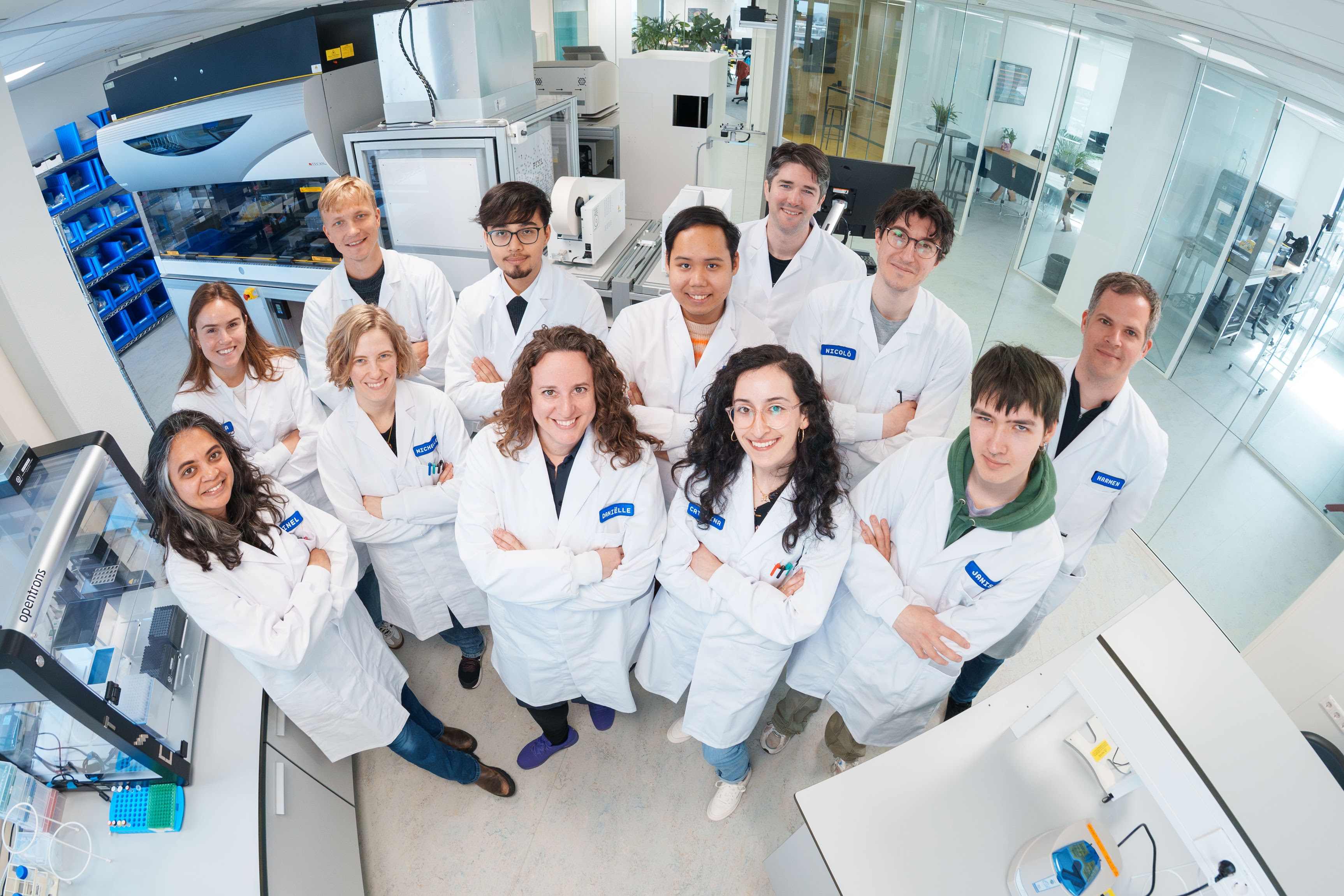
Its software combined generative models with laboratory results to suggest protein sequences with desired properties. Cradle planned to expand its wet laboratory, investigate additional protein types and properties, grow its engineering team and broaden commercial operations.

Cradle's laboratory team in an undated company photograph. Photo: Cradle.

Docling extracts text and tables from PDFs as open-source software

IBM Research Zurich's AI for knowledge team made Docling publicly available as an open-source document conversion toolkit. The first public release, version 0.1.1, appeared on July 15, followed by version 1.0 three days later. The software combines specialised AI models for document layout and table structure with a pipeline that extracts useful information from PDFs.

Released under the permissive MIT licence, Docling was designed to run on ordinary computing hardware and to support extensions with additional models and processing features. Its structured document outputs provide a foundation for search, retrieval-augmented generation and AI training workflows. The pipeline moves beyond extracting isolated text by preserving document organisation and tables, making information in complex reports and other PDFs more accessible to downstream software.

Docling document-conversion illustration. Image: IBM Research.

Event cameras and AI speed up obstacle detection

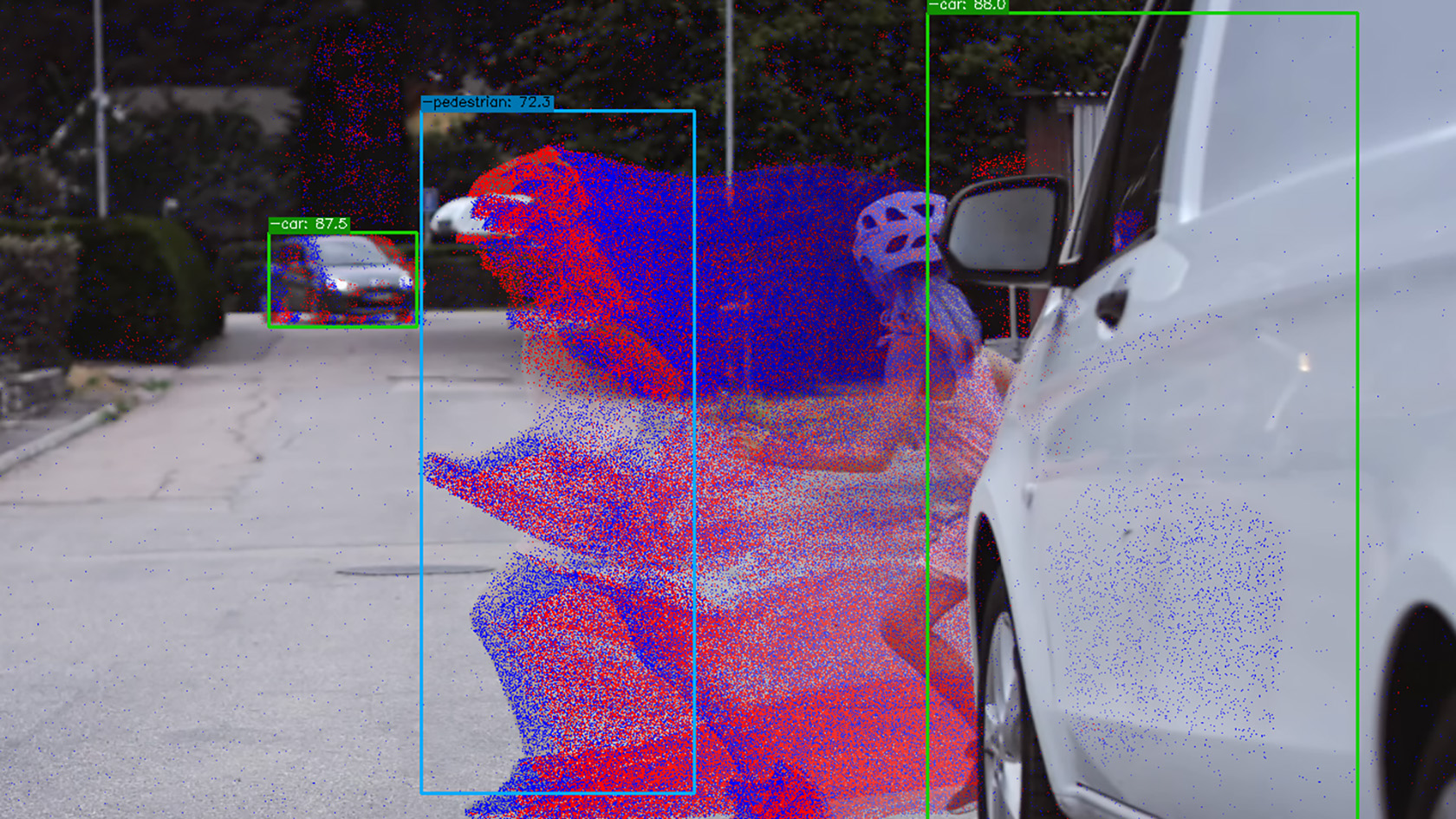
University of Zurich researchers Daniel Gehrig and Davide Scaramuzza developed a hybrid vision system that combines conventional images with the rapid brightness-change signals produced by an event camera. A convolutional neural network processes the ordinary images, while an asynchronous graph neural network analyses events to anticipate objects appearing between frames. The system was presented in a Nature study.

In the reported comparisons, the hybrid detector reduced detection latency by a factor of 100 without sacrificing accuracy. Its conventional camera operated at 20 frames per second; the combined system offered detection timing comparable to a 5,000-frame-per-second camera at the bandwidth of a conventional 50-frame-per-second camera. The research addresses the delay between capturing a scene and detecting an obstacle, a critical perception bottleneck in driver assistance and autonomous vehicles.

Conventional image and event-camera signals from a running pedestrian. Image: Robotics and Perception Group / UZH.

Cradle raises USD 24M Series A

Cradle, which operated in Zurich and Delft, raised USD 24 million in Series A funding led by Index Ventures, with participation from Kindred Capital and angel investors including Chris Gibson and Tom Glocer. The round brought its total financing to USD 33 million. Cradle planned to expand its machine-learning and biotechnology team, develop its software and strengthen sales capabilities.

The company used generative AI to help scientists design proteins with selected properties, including stability, activity and binding affinity. At the announcement, its 20-person team was working with nine industry partners, including Janssen Research & Development, Novozymes and Twist Bioscience, across more than a dozen research projects. Its web-based platform was designed for experimental scientists without requiring machine-learning expertise.

Cradle's founders in an undated company photograph. Photo: Cradle.

64-core analog chip runs neural networks using memory cells

IBM researchers presented a 64-core mixed-signal chip that performs neural-network calculations using phase-change memory. Instead of repeatedly transferring stored weights to a separate arithmetic unit, the chip represents those weights through electrical conductance and carries out matrix operations within memory arrays. The design combines this analog computation with digital functions for processing activations and moving information between cores.

The international team included IBM Research Zurich's Manuel Le Gallo and colleagues working on in-memory computing. Manufactured in a 14-nanometre process, the research chip demonstrated inference on networks including image-recognition and recurrent models with accuracy approaching software implementations. Published in Nature Electronics, the work addressed how analog computing could support more complete neural-network workloads rather than isolated operations. The research processor brought analog memory arrays and their supporting digital circuitry together on one chip.

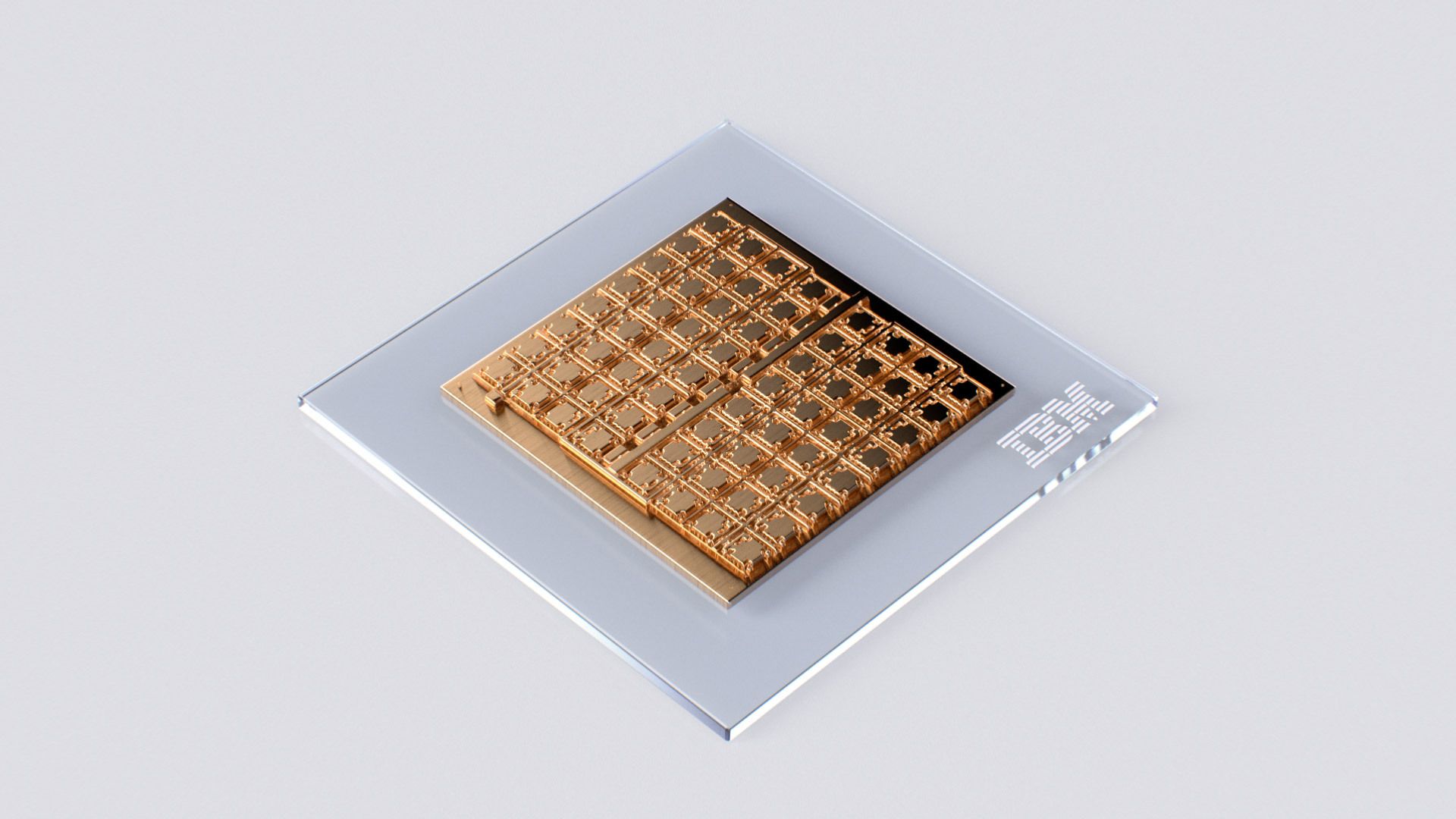
Illustration accompanying IBM's analog AI chip research. Image: IBM Research.

EthonAI raises CHF 6.27M seed

EthonAI raised CHF 6.27 million in seed funding led by Earlybird Venture Capital and La Famiglia, with existing investors Wingman Ventures and Acequia Capital participating. The ETH Zurich spin-off planned to bring its quality-management software to more manufacturers and develop additional capabilities, including simulation based on causal machine learning.

The platform combined production and quality data to detect defects, monitor processes and investigate the causes of quality problems. Its visual-inspection tools highlighted suspected defects for human inspectors, while its analytics helped engineers examine factors such as temperature, tool pressure and vibration. The software was designed for process engineers and quality managers without programming expertise. Customers named at the announcement included Siemens, Roche and Lindt & Spruengli.

The EthonAI team in ETH Zurich's report on the seed financing. Photo: ETH Zurich / EthonAI.

FRAN makes faces look older or younger in video

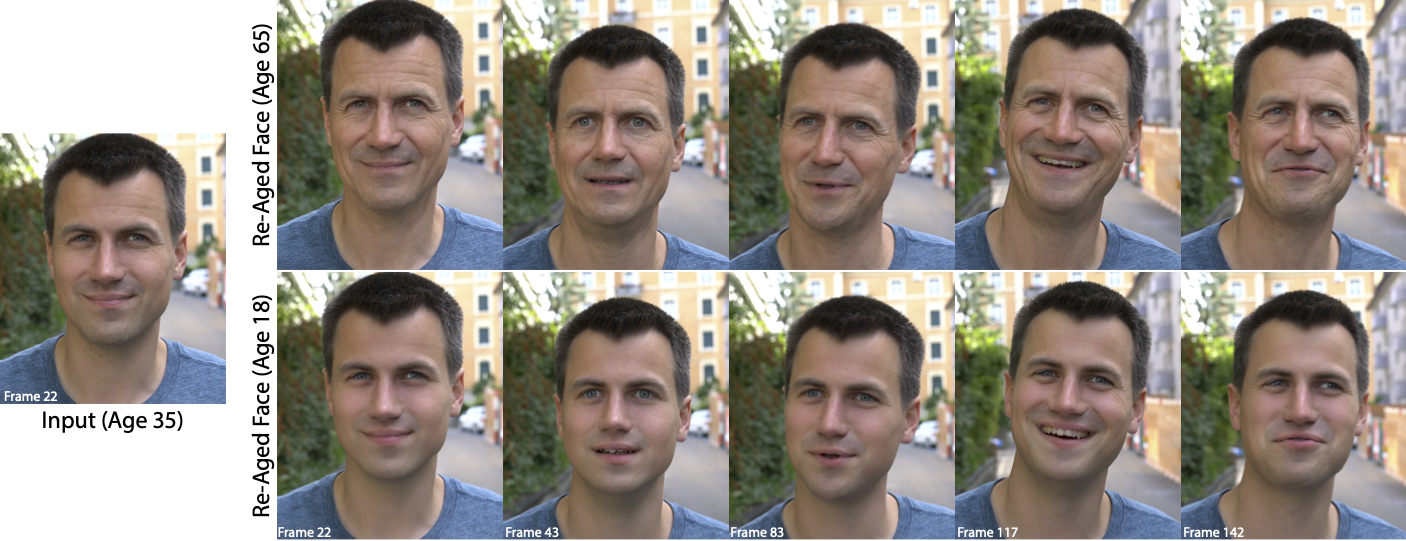
Disney Research Studios and ETH Zurich researchers presented FRAN, a neural method for changing a person's apparent age in video while preserving identity and expression. The system was trained using synthetic images of faces at different ages, addressing the difficulty of assembling real photographs of the same people across decades. Its image-to-image network applies age-related changes while retaining details needed for visual-effects work.

The research focused on consistency across video frames and robustness to variations in viewpoint, lighting and facial expression. It also provided controls for artists to adjust the effect locally rather than accepting a single automatic result for the entire face. Published as production-ready face re-aging research, FRAN gave visual-effects artists a tool for applying consistent age changes while retaining control of the final appearance.

Face re-aging examples from the FRAN research. Image: Disney Research Studios.

LatticeFlow raises USD 12M Series A

Zurich-based LatticeFlow raised USD 12 million in a Series A backed by Atlantic Bridge, OpenOcean and FPV Ventures, with existing investors also participating. The ETH Zurich spin-off develops tools to identify problems in computer vision datasets and models before those problems undermine real-world deployment. Investor btov, now b2venture, announced the financing on 26 October.

The platform addresses the gap between performance on laboratory datasets and reliability in production, where images and operating conditions can differ from training examples. Its tools automate diagnosis and correction work that otherwise requires machine learning engineers to inspect data and models manually. At the announcement, the company cited customers including Siemens Mobility and AI businesses Intenseye, Voxel AI and Carscan.

LatticeFlow photograph accompanying the investor's Series A announcement. Source: b2venture / LatticeFlow.

Gran Turismo Sophy AI races world champions

Sony AI unveiled Gran Turismo Sophy, a racing agent trained with deep reinforcement learning to compete against leading human players in Gran Turismo Sport. The research combined vehicle control, overtaking tactics and racing etiquette, including learning to avoid penalties and collisions. Sony AI developed the system with Polyphony Digital and Sony Interactive Entertainment, using large-scale training infrastructure to improve its behaviour through repeated simulated races.

The Nature research followed competitions against champion drivers in the Gran Turismo Sport simulation in 2021. Zurich-based Sony AI researcher Florian Fuchs worked on developing and training Sophy as part of the international team. The February announcement presented the research achievement, covering the agent's training method and competitive performance.

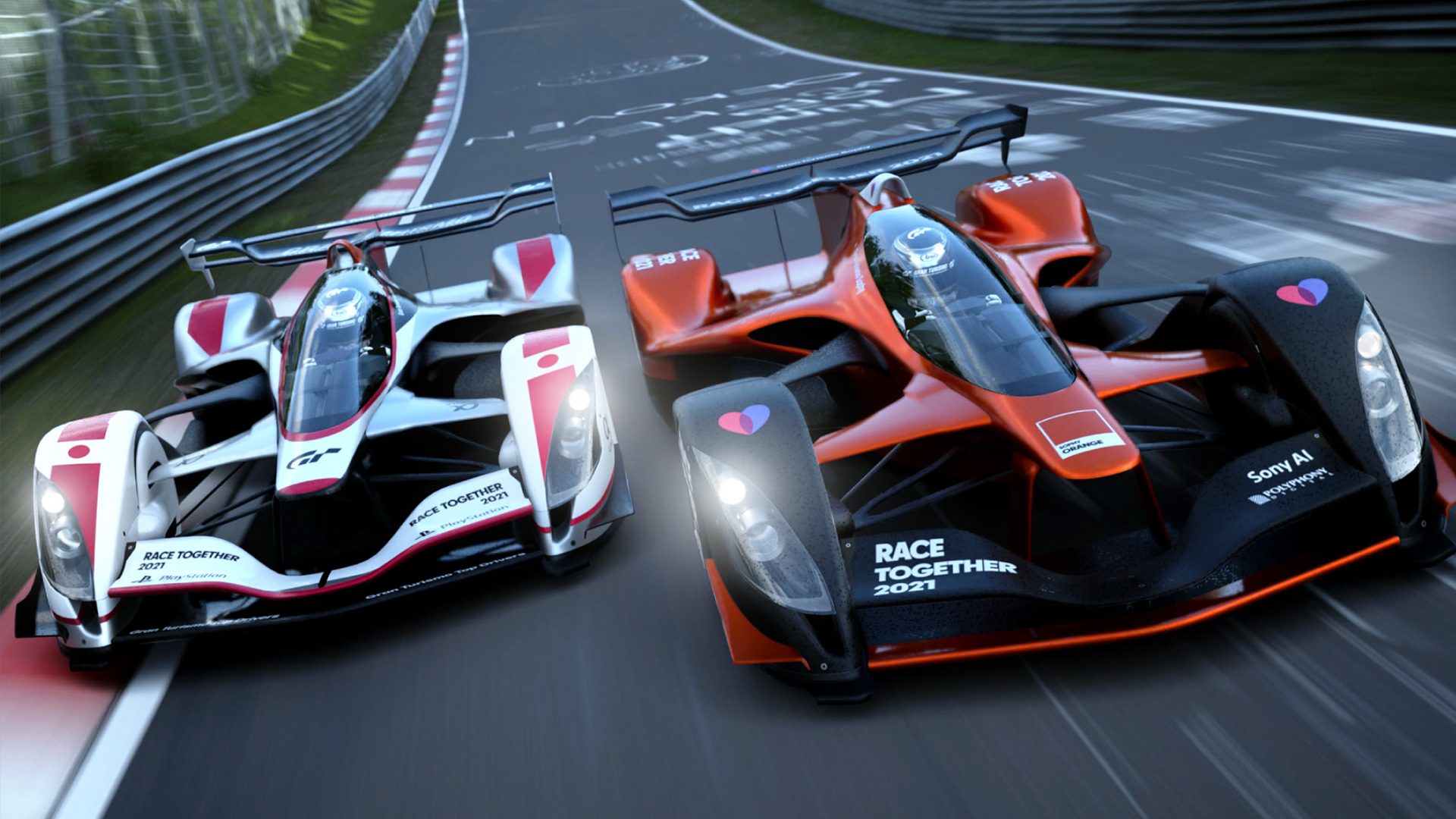
Gran Turismo racing imagery accompanying Sony's Sophy announcement. Image: Sony Interactive Entertainment / Polyphony Digital.

ANYmal robot uses vision and touch to navigate rough terrain

ETH Zurich researchers developed a controller that lets the four-legged ANYmal robot combine what its cameras perceive with information about its own movements and contact with the ground. The system learns when visual measurements are unreliable, allowing it to continue across obstacles even when snow, vegetation or poor visibility make the terrain difficult to interpret. Marco Hutter's group trained the controller in simulation before testing it outdoors.

On a route up Mount Etzel, the robot covered 120 metres of elevation in 31 minutes without falling. The result, reported in Science Robotics, addresses a practical limitation of walking robots: neither vision alone nor feedback from the legs is sufficient in every environment. The controller combines both sources rather than requiring an accurate terrain model at every step.

ANYmal on rocky terrain during outdoor testing. Photo: Takahiro Miki / ETH Zurich.

Confirm

Install zurich.tech