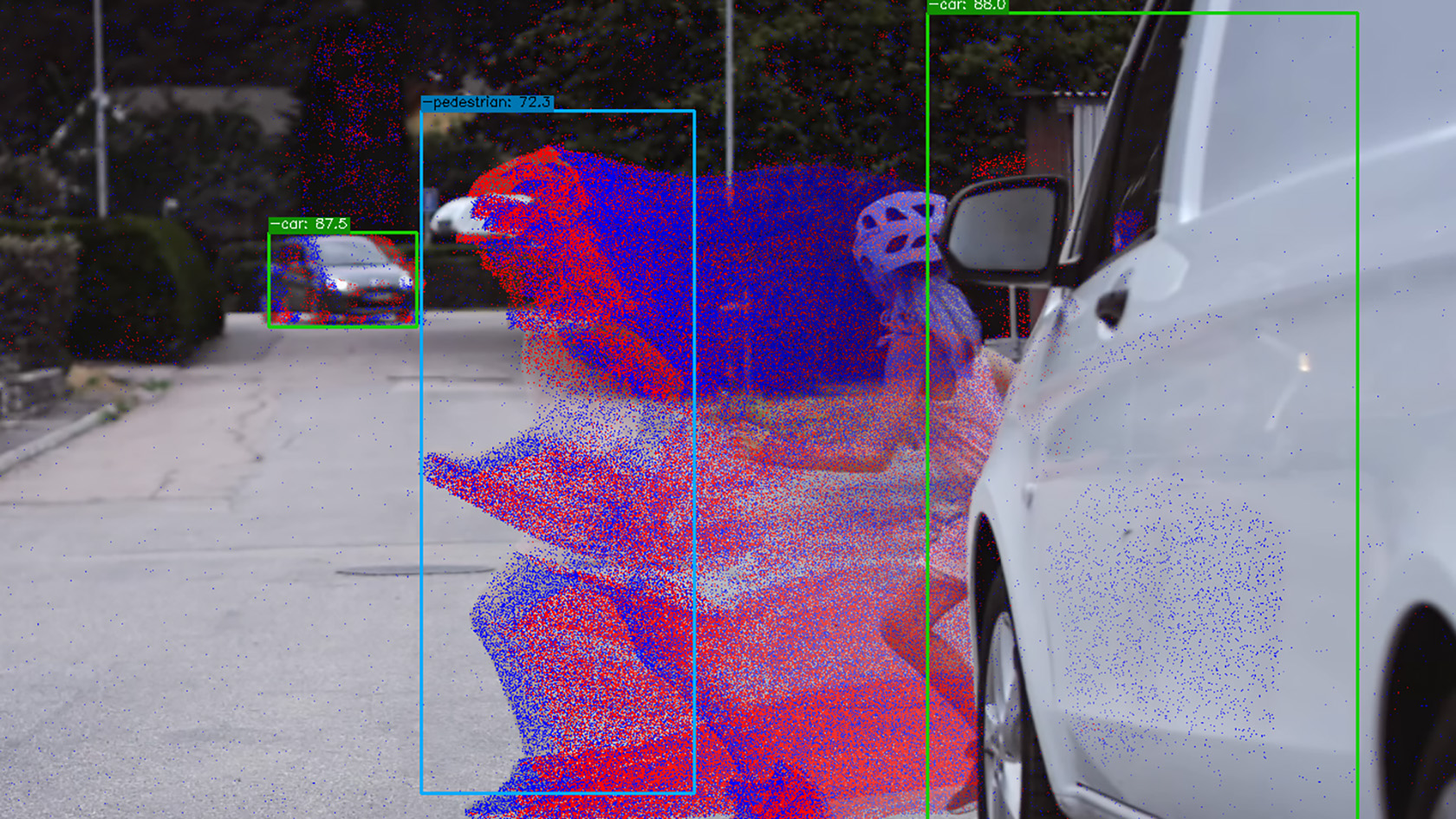
University of Zurich researchers Daniel Gehrig and Davide Scaramuzza developed a hybrid vision system that combines conventional images with the rapid brightness-change signals produced by an event camera. A convolutional neural network processes the ordinary images, while an asynchronous graph neural network analyses events to anticipate objects appearing between frames. The system was presented in a Nature study.
In the reported comparisons, the hybrid detector reduced detection latency by a factor of 100 without sacrificing accuracy. Its conventional camera operated at 20 frames per second; the combined system offered detection timing comparable to a 5,000-frame-per-second camera at the bandwidth of a conventional 50-frame-per-second camera. The research addresses the delay between capturing a scene and detecting an obstacle, a critical perception bottleneck in driver assistance and autonomous vehicles.