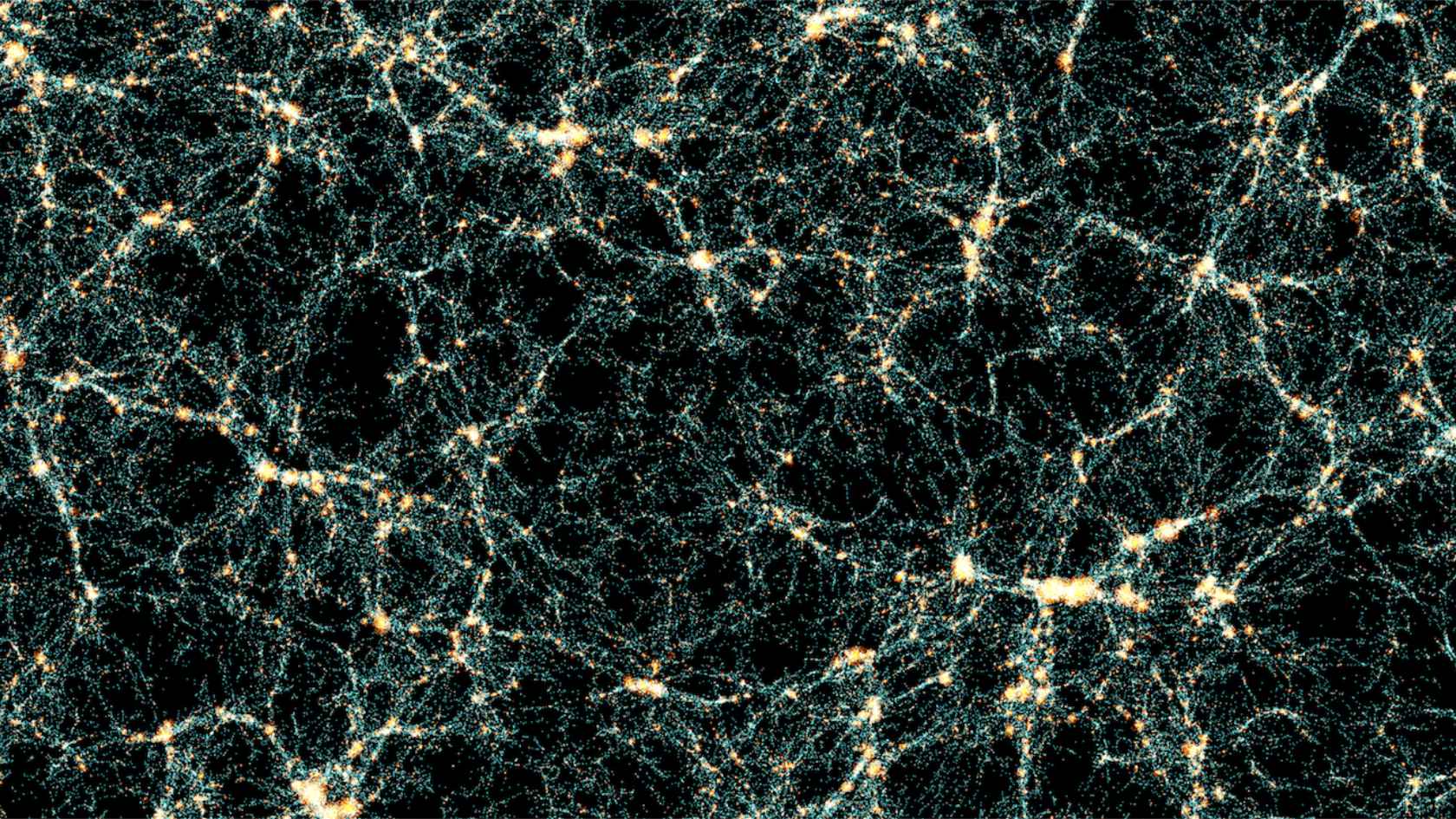
The Euclid Consortium released Flagship 2, a synthetic catalogue containing 3.4 billion galaxies with approximately 400 modelled properties each. The catalogue provides a testbed for interpreting observations from ESA's Euclid space telescope, including galaxy positions, brightness, velocities and shapes. Its underlying simulation used algorithms developed by University of Zurich astrophysicist Joachim Stadel.
The gravitational calculation tracked four trillion particles on CSCS's Piz Daint supercomputer in Lugano in 2019. Researchers subsequently populated the resulting structures with galaxies to reproduce the survey that Euclid would observe. The September 2025 milestone was the catalogue's public release. It gives teams a common reference for developing automated analysis and comparing observations with predictions of the standard cosmological model, including the distribution of dark matter and the effects of cosmic expansion.