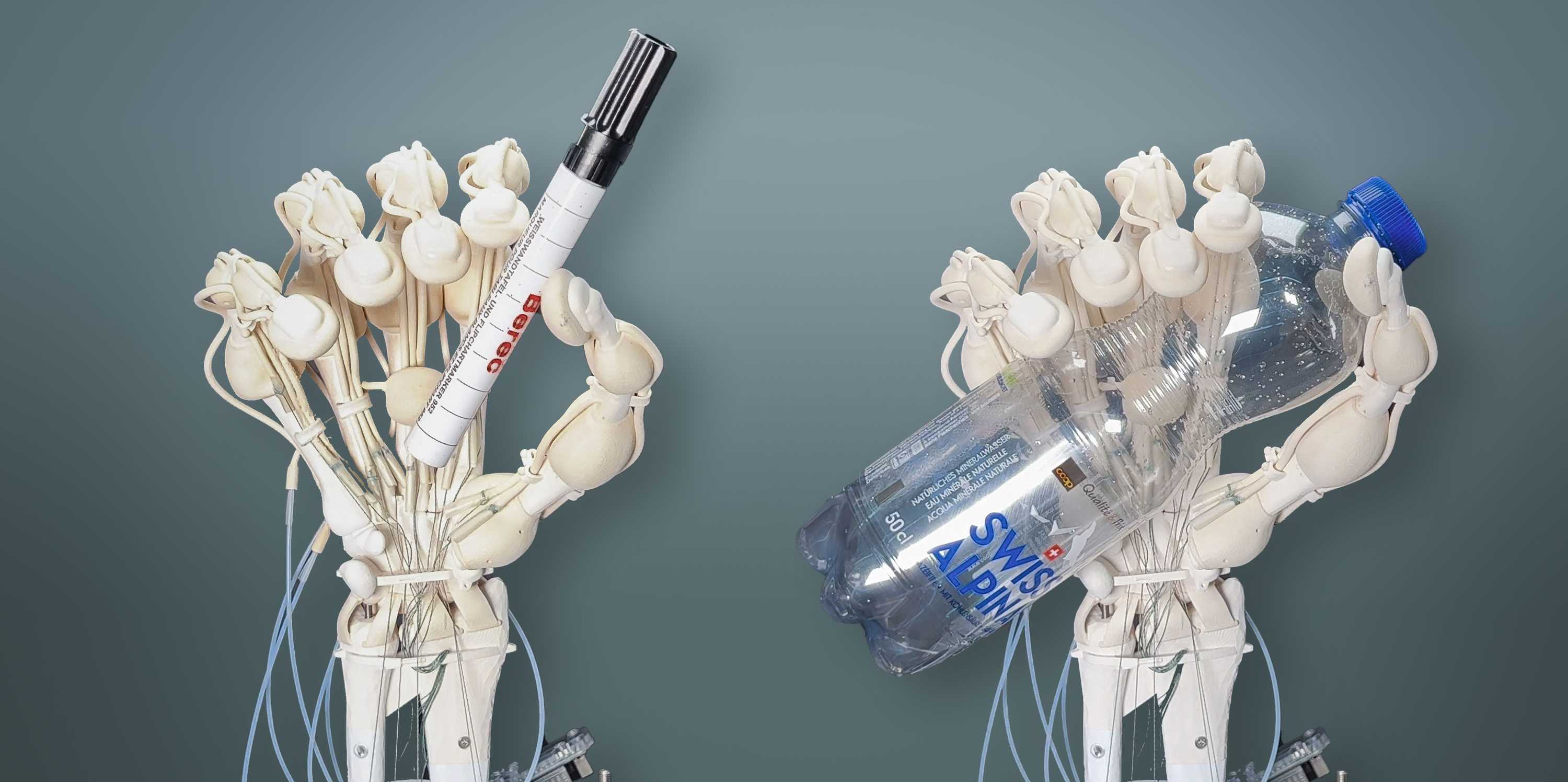
ETH Zurich researchers and US company Inkbit demonstrated a 3D-printing process that combines rigid and elastic materials in complex robotic structures. One example was a hand containing artificial bones, ligaments and tendons printed together rather than assembled from separately manufactured components. The process accommodated slow-curing polymers whose elastic properties are useful for soft robotic mechanisms.
Vision-controlled jetting scans each deposited layer and uses the measurements to adjust the next layer, compensating for irregularities without scraping the surface flat. That change allows materials that are unsuitable for conventional fast-curing inkjet processes to be incorporated. Inkbit developed the printing technology, while ETH's team developed robotic applications and helped optimise the approach. The Nature publication demonstrated how the manufacturing method could produce functional robotic structures with different mechanical properties in a single build.