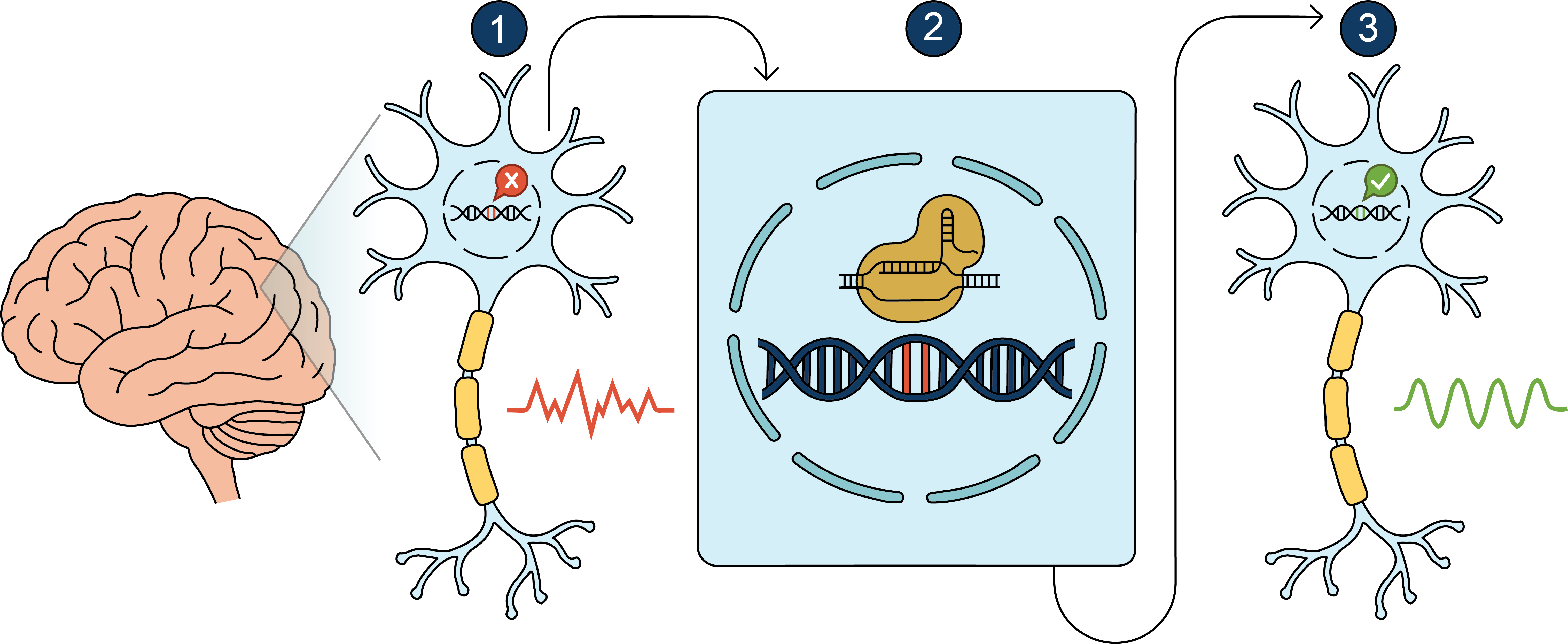
University of Zurich researchers have used prime editing to repair an inherited epilepsy mutation directly in mouse brain cells. The treatment corrected the faulty SCN1A sequence rather than adding another copy of the gene, preserving its normal regulation. It improved communication between nerve cells and survival in a model of the inherited epilepsy syndrome GEFS+.
Around 80 percent of untreated control animals developed fever-induced seizures, compared with about 15 percent after the most effective editing treatment. The work targets the genetic cause rather than suppressing symptoms with medication. The result is specific to this mutation and mouse model; it has not yet established an effective treatment for people with epilepsy.